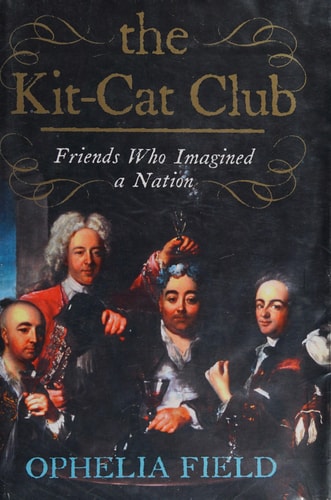
The Kit-Cat Club: Friends Who Imagined a Nation
0
0
As an Amazon Associate and affiliate partner, Menrva Books earns from qualifying purchases. Learn more
Author Description
Ophelia Field’s ‘Kit-Cat Club’ is a story of a changing time in 17th-century Britain, during the reigns of Queen Anne and George I, when a group of men and their enterprising initiatives paved the way for new literary and political viewpoints, born out of the most unexpected circumstances.The Kit-Cat Club was founded in the late 1690s when Jacob Tonson, a bookseller of lowly birth, forged a partnership with the pie-maker Christopher (Kit) Cat. What began as an eccentric publishing rights deal – Tonson paying to feed hungry young writers and so receiving first option on their works – developed into a unique gathering of intellects and interests, then into the unofficial centre of Whig power during the reigns of William & Mary, Anne and George I.With consummate skill, Ophelia Field, author of the acclaimed biography of the first Duchess of Marlborough, ‘The Favourite’, portrays this formative period in British history through the club’s intimate lens. She describes the vicious Tory-Whig ‘paper wars’, the mechanics of aristocratic patronage, the London theatre world and its battles over sexual morality, England’s union with Scotland, Dublin society governed by a Kit-Cat and the hurly-burly of Westminster politics.Field expertly unravels the deceit, rivalry, friendships and fortunes lost and found through the club, along with wonderful descriptions of how its alcohol-fuelled, all-male meetings were conducted. Tracing the Kit-Cat Club’s far-reaching influence for the first time, this group biography illuminates a time when Britain was searching for its own identity.
Menrva's Summary
THE THESIS
This work investigates how a loose association of writers, politicians, and aristocrats known as the Kit-Cat Club functioned as a crucible for the political and cultural identity of early 18th-century Britain. Ophelia Field, an established biographer, utilizes extensive archival research and correspondence to reconstruct the social dynamics of this influential group. She argues that the club served as an unofficial engine for Whig ideology, bridging the gap between the commercial interests of the publishing trade and the high-stakes maneuvering of the Westminster political establishment.
THE SCOPE MAP
What You Will Find
- The evolution of the Whig party and its influence during the reigns of William & Mary, Anne, and George I.
- The mechanics of 17th-century literary patronage and the commercial publishing strategies of Jacob Tonson.
- Analysis of the 'paper wars' between Tory and Whig factions and their impact on public discourse.
- Detailed accounts of the social and political culture within London’s coffee houses and private dining circles.
THE AUTHORITY PERSPECTIVE
This text provides a dense, meticulously researched examination of the intersection between intellectual life and political power in late Stuart and early Georgian England. The narrative framing offers a specialized look at how informal social networks shaped the formal governance and cultural trajectory of the British state.
Page Count:
448
Publication Date:
2008-01-01
Publisher:
Harper
ISBN-10:
0007178921
ISBN-13:
9780007178926
History
Biography
Political History
Europe
Kindle Store
Literary History
17th Century
18th century
London England
Kindle eBooks
Great Britain
Categories
British History