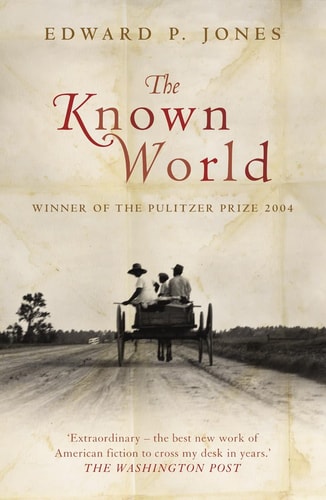
The Known World
0
0
As an Amazon Associate and affiliate partner, Menrva Books earns from qualifying purchases. Learn more
Author Description
In one of the most acclaimed novels in recent memory, two-time National Book Award Finalist Edward P. Jones introduces us to Henry Townsend, a black farmer, boot maker and former slave who comes under the tutelage of William Robbins, the most powerful man in Jones's fictitious Manchester County, Virginia. Making certain he never circumvents the law, Townsend runs his affairs with unusual discipline. But his widow, Caledonia, can't uphold the order he has imposed on his estate and it begins to fall apart shortly after his death. Slaves take to escaping under the cover of night, and families who had once found love beneath the weight of slavery begin to betray one another. Beyond the Townsend estate, the known world also low-paid white patrollers stand watch as slave ' speculators' sell free black people into slavery, and rumors of slave rebellions set white families against slaves who have served them for years.
Menrva's Summary
THE PULSE
The death of Henry Townsend, a black slaveholder in antebellum Virginia, triggers the slow disintegration of his meticulously ordered estate and exposes the moral rot inherent in the institution of slavery. Townsend, a former slave who rose to become a landowner under the influence of a powerful white mentor, leaves behind a widow, Caledonia, who lacks the iron-willed discipline required to maintain his complex social and economic structures. As the narrative shifts through time and perspective, it examines the lives of those bound to the Townsend estate, revealing how the brutal logic of slavery corrupts human relationships and erodes the possibility of genuine freedom. The story unfolds through a non-linear, omniscient lens that captures the interconnected fates of both the enslaved and the enslavers across Manchester County.
INSIDE THE PAGES
- Non-linear narrative structure that spans decades of history
- Omniscient narrator providing insight into the interior lives of diverse characters
- Exploration of the moral complexities of black slave ownership
- Detailed depiction of the social hierarchy in antebellum Virginia
- Examination of the psychological impact of systemic oppression
- Focus on the fragility of order within a dehumanizing economic system
- Interweaving of personal histories with broader regional tensions
- Use of historical realism to ground the narrative in a specific time and place
THE COLLECTIVE ECHO
This novel is widely regarded as a significant contribution to American literature, frequently praised for its intricate structure and its unflinching examination of the complexities of slavery. Critics often highlight the author's ability to maintain a detached, almost historical tone while depicting deeply personal and often devastating human experiences. The work is noted for its refusal to offer simple moral binaries, instead forcing the reader to confront the uncomfortable realities of a society built upon human bondage. Its reception has been characterized by deep respect for its ambition and the precision of its prose, cementing its status as a modern classic in the genre of historical fiction.
Page Count:
400
Publication Date:
2003-08-26
Publisher:
Amistad
ISBN-10:
000719529X
ISBN-13:
9780007195299
Literary Fiction
Historical Fiction
Virginia
American South
Slavery
African Americans
Community Tags
Other Editions(4)


Similar Books