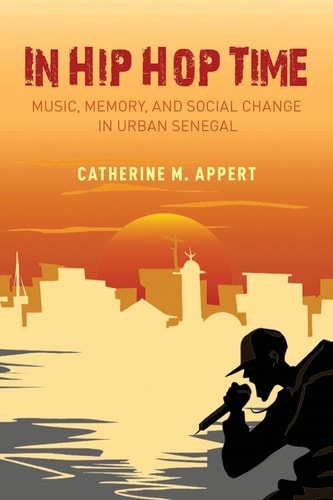
In Hip Hop Time: Music, Memory, and Social Change in Urban Senegal
0
0
As an Amazon Associate and affiliate partner, Menrva Books earns from qualifying purchases. Learn more
Author Description
In the twenty-first century, Senegalese hip hop--"Rap Galsen"--has reverberated throughout the world as an exemplar of hip hop resistance in its mobilization against government corruption during a series of tumultuous presidential elections. Yet Senegalese hip hop's story goes beyond resistance; it is a story of globalization, of diasporic movement and memory, of imagined African pasts and contemporary African realities, and of urbanization and the banality of socio-economic struggle. At particular moments in Rap Galsen's history, origin narratives linked hip hop to a mythologized Africa through the sounds of indigenous oralities. At other times, contrasting narratives highlighted hip hop's equally mythologized roots in the postindustrial U.S. inner city and African American experience. As Senegalese youth engage these globally circulating narratives, hip hop performance and its stories negotiate their place in a rapidly changing world. In Hip Hop Time explores this relationship between popular music and social change, framing Senegalese hip hop as a musical movement deeply tied to both indigenous performance practices and changing social norms in urban Africa. Author Catherine Appert takes us from Senegalese hip hop's beginnings among cosmopolitan youth in Dakar's affluent neighborhoods in the 1980s, to its spread throughout the city's ghettoized working class neighborhoods in the mid- to late-'90s, and into the present day, where political activism and hip hop musicality vie for position in local and global arenas. An ethnography of the inextricability of musical and social meaning in hip hop practice, In Hip Hop Time charts new intellectual territory in the scholarship of African and global hip hop.
Menrva's Summary
THE THESIS
How does Senegalese hip hop, or Rap Galsen, function as a site for negotiating memory, globalization, and social change within urban Africa? Catherine M. Appert, an ethnomusicologist, utilizes ethnographic research to examine the evolution of hip hop in Senegal from the 1980s to the present. She argues that the genre serves as a critical intersection where indigenous oral traditions, African American cultural influences, and local political activism converge to shape contemporary Senegalese identity.
THE SCOPE MAP
What You Will Find
- Historical analysis of Rap Galsen from its 1980s origins to modern political activism.
- Examination of the tension between mythologized African pasts and postindustrial U.S. influences.
- Ethnographic accounts of musical performance in both affluent and working-class neighborhoods in Dakar.
Scope Limits
- The study focuses primarily on the urban context of Dakar and may not reflect rural musical practices.
- The text does not provide a comprehensive discography of all Senegalese hip hop artists.
THE AUTHORITY PERSPECTIVE
Scholars in ethnomusicology and African studies recognize this work as a significant contribution to the understanding of global hip hop movements. Readers frequently note the academic rigor and the depth of the author's ethnographic fieldwork in documenting the intersection of music and social struggle.
Page Count:
248
Publication Date:
2018-12-10
Publisher:
Oxford University Press
ISBN-10:
0190913495
ISBN-13:
9780190913496
Music
Rap Music
Social change
Popular music
Hip-hop
Sociology
Ethnic
Senegal
Humanities
Community Tags
Similar Books