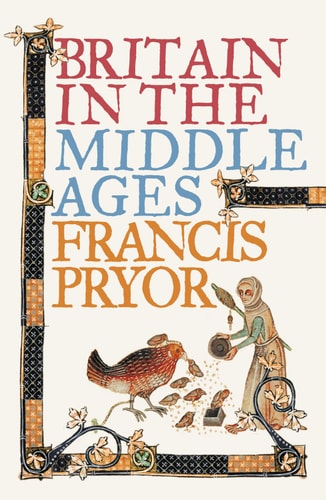
Britain in the Middle Ages: An Archaeological History
0
0
As an Amazon Associate and affiliate partner, Menrva Books earns from qualifying purchases. Learn more
Author Description
As in ‘Britain B.C.’ and ‘Britain A.D.’ (also accompanied by Channel 4 series), eminent archaeologist Francis Pryor challenges familiar historical views of the Middle Ages by examining fresh evidence from the ground.The term 'Middle Ages' suggests a time between two other ages: a period when nothing much happened. In his radical reassessment, Francis Pryor shows that this is very far from the truth, and that the Middle Ages (approximately 800-1550) were actually the time when the modern world was born. This was when Britain moved from Late Antiquity into a world we can recognize as more or less familiar: roads and parishes became fixed; familiar institutions, such as the church and local government, came into being; industry became truly industrial; and international trade was now a routine process.Archaeology shows that the Middle Ages were far from static. Based on everyday, often humdrum evidence, it demonstrates that the later agricultural and industrial revolutions were not that unexpected, given what we now know of the later medieval period. Similarly, the explosion of British maritime power in the late 1700s had roots in the 15th century.The book stresses continuous development at the expense of ‘revolution', though the Black Death (1348), which killed a third of the population, did have a profound effect in loosening the grip of the feudal system. Labour became scarce and workers gained power; land became more available and the move to modern farming began.The Middle Ages can now be seen in a fresh light as an era of great inventiveness, as the author examines such topics as 'upward mobility'; the power of the Church; the role of the Guilds as precursors of trade unions; the transport infrastructure of roads, bridges and shipbuilders; and the increase in iron production.
Menrva's Summary
THE THESIS
Francis Pryor investigates whether the Middle Ages in Britain were a stagnant period of transition or a dynamic era of foundational development that birthed the modern world. Drawing on his extensive background as a field archaeologist, Pryor utilizes physical evidence from the ground to challenge traditional historical narratives that characterize the period between 800 and 1550 as static. He argues that the modern British landscape, institutional framework, and industrial capacity were not sudden inventions but the result of continuous, incremental evolution rooted in medieval innovation.
THE SCOPE MAP
What You Will Find
- Analysis of the period from 800 to 1550, focusing on the transition from Late Antiquity to the early modern era.
- Examination of infrastructure development, including the establishment of roads, bridges, and parish systems.
- Evidence derived from archaeological excavations of everyday sites rather than elite monuments.
- Exploration of economic shifts, such as the rise of guilds, international trade, and early industrial iron production.
THE AUTHORITY PERSPECTIVE
The work presents a dense, evidence-based argument that prioritizes material culture over traditional textual history to reframe the medieval period. The framing suggests an accessible yet rigorous scholarly approach intended for readers interested in the intersection of archaeology and social history.
Page Count:
320
Publication Date:
2007-05-01
Publisher:
Harper Perennial
ISBN-10:
0007203624
ISBN-13:
9780007203628
History
Social History
Great Britain
British History
Archaeology
Community Tags
Similar Books