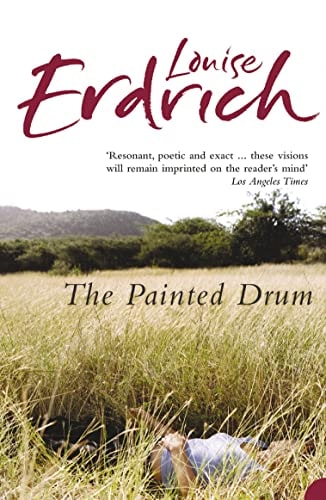
The Painted Drum
0
0
As an Amazon Associate and affiliate partner, Menrva Books earns from qualifying purchases. Learn more
Author Description
When a woman named Faye Travers is called upon to appraise the estate of a family in her small New Hampshire town, she isn't surprised to discover a forgotten cache of valuable Native American artifacts. After all, the family descends from an Indian agent who worked on the North Dakota Ojibwe reservation that is home to her mother's family. However, she stops dead in her tracks when she finds in the collection a rare drum -- a powerful yet delicate object, made from a massive moose skin stretched across a hollow of cedar, ornamented with symbols she doesn't recognize and dressed in red tassels and a beaded belt and skirt -- especially since, without touching the instrument, she hears it sound.From Faye's discovery, we trace the drum's passage both backward and forward in time, from the reservation on the northern plains to New Hampshire and back. Through the voice of Bernard Shaawano, an Ojibwe, we hear how his grandfather fashioned the drum after years of mourning his young daughter's death, and how it changes the lives of those whose paths its crosses. And through Faye we hear of her anguished relationship with a local sculptor, who himself mourns the loss of a daughter, and of the life she has made alone with her mother, in the shadow of the death of Faye's sister.Through these compelling voices, The Painted Drum explores the strange power that lost children exert on the memories of those they leave behind, and as the novel unfolds, its elegantly crafted narrative comes to embody the intricate, transformative rhythms of human grief. One finds throughout the grace and wit, the captivating prose and surprising beauty, that characterize Louise Erdrich's finest work.
Menrva's Summary
THE PULSE
The discovery of a mysterious, sentient drum in a New Hampshire estate triggers a multi-generational reckoning with grief and ancestral legacy. Faye Travers, an appraiser, finds her life irrevocably altered when she encounters an Ojibwe drum that emits sound without being touched. The narrative shifts between Faye's contemporary struggle with personal loss and the historical account of Bernard Shaawano, whose grandfather created the instrument following the death of his daughter. These intersecting timelines reveal how the object acts as a conduit for the spirits of lost children, forcing the living to confront their own unresolved mourning and the weight of their heritage.
INSIDE THE PAGES
- Non-linear narrative structure that oscillates between the present day and historical accounts
- Multiple first-person perspectives providing intimate access to character interiority
- Integration of Ojibwe cultural mythology and spiritual traditions
- Exploration of the intersection between material objects and ancestral memory
- Themes of grief, loss, and the persistence of the past in the present
- Use of magical realism to animate the inanimate drum
- Focus on the psychological impact of familial trauma
- Prose style characterized by lyrical descriptions and rhythmic pacing
THE COLLECTIVE ECHO
This novel is widely regarded as a poignant examination of the ways in which grief shapes human identity and cultural memory. Critics often highlight Erdrich's ability to weave disparate timelines into a cohesive whole, noting the emotional resonance of the central artifact. The work is frequently praised for its sensitive portrayal of Ojibwe history and the complex, often painful, connections between generations. Readers typically find the prose to be both evocative and intellectually demanding, cementing the book's status as a significant entry in the author's body of work.
Page Count:
288
Publication Date:
2006-09-18
Publisher:
Harper Perennial
ISBN-10:
0007232098
ISBN-13:
9780007232093
Literary Fiction
Contemporary
Native American
Fiction psychological
North America
Family Saga
New England