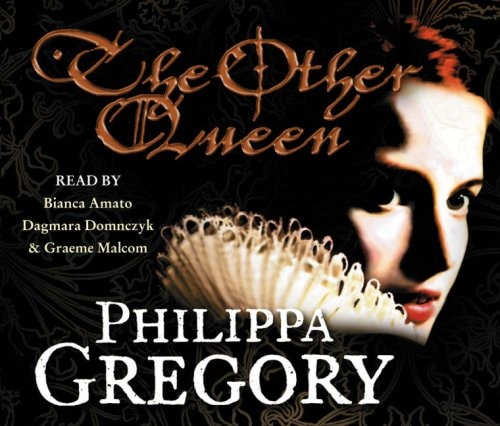
The Other Queen
0
0
As an Amazon Associate and affiliate partner, Menrva Books earns from qualifying purchases. Learn more
Author Description
1568, AUTUMN, CHATSWORTH HOUSE, DERBYSHIRE: BESS Every woman should marry for her own advantage since her husband will represent her, as visible as her front door, for the rest of his life. If she chooses a wastrel she will be avoided by all her neighbors as a poor woman; catch a duke and she will be Your Grace, and everyone will be her friend. She can be pious, she can be learned, she can be witty and wise and beautiful, but if she is married to a fool she will be "that poor Mrs. Fool" until the day he dies. And I have good reason to respect my own opinion in the matter of husbands having had three of them, and each one, God bless him, served as stepping stone to the next until I got my fourth, my earl, and I am now "my lady Countess of Shrewsbury": a rise greater than that of any woman I know. I am where I am today by making the most of myself, and getting the best price for what I could bring to market. I am a self-made woman -- self-made, self-polished, and self-sold -- and proud of it. Indeed, no woman in England has done better than me. For though we have a queen on the throne, she is only there by the skill of her mother, and the feebleness of her father's other stock, and not through any great gifts of her own. If you kept a Tudor for a breeder you would eat him for meat in your second winter. They are poor weak beasts, and this Tudor queen must make up her mind to wed, bed, and breed, or the country will be ruined. If she does not give us a bonny Protestant boy then she will abandon us to disaster, for her heir is another woman: a young woman, a vain woman, a sinful woman, an idolatrous Papist woman, God forgive her errors and save us from the destruction she will bring us. Some days you hear one story of Mary Queen of Scots, some days another. What you will never, never hear, even if you listen a hundred times, even when the story is told by her adoring admirers, is the story of a woman who consults
Menrva's Summary
THE PULSE
The arrival of Mary, Queen of Scots, as a prisoner in England forces Bess of Hardwick into a dangerous political game where her own status and safety are inextricably linked to the fate of the rival queen. Bess, a shrewd and ambitious countess, finds her carefully constructed life at Chatsworth House disrupted by the presence of the captive monarch. She must navigate the volatile demands of Elizabeth I, the complex personality of her royal guest, and the shifting loyalties of her own husband. The narrative unfolds through alternating perspectives, providing a multi-layered view of the power dynamics within the Elizabethan court and the domestic sphere.
INSIDE THE PAGES
- Alternating first-person perspectives between Bess of Hardwick and Mary, Queen of Scots
- Detailed exploration of 16th-century social climbing and marital politics
- Focus on the domestic management of high-stakes political imprisonment
- Portrayal of the psychological tension between two powerful women
- Examination of the religious conflicts defining the Tudor era
- Emphasis on the precarious nature of favor under Elizabeth I
- Intimate look at the daily life and constraints of noblewomen in the 1500s
- Strategic use of historical setting to drive character motivation
THE COLLECTIVE ECHO
This novel is characterized by its focus on the intersection of personal ambition and national political instability during the Elizabethan era. The narrative structure highlights the stark contrast between the pragmatic, self-made Bess of Hardwick and the romanticized, yet trapped, Mary, Queen of Scots. Readers often note the author's ability to humanize historical figures while maintaining the high-stakes tension inherent in the Tudor succession crisis. The prose emphasizes the claustrophobic nature of the imprisonment at Chatsworth, effectively grounding the grand historical events in the immediate, often petty, concerns of the household. The work serves as a study in how individual women maneuvered for survival and influence within a rigid, male-dominated power structure.
Page Count:
5
Publication Date:
2008-08-25
Publisher:
Harpercollins
ISBN-10:
0007266375
ISBN-13:
9780007266371
Historical Fiction
Romance
Royalty
Fiction biographical
Biographical fiction
FICTION Historical
Thrillers
Historical
Tudor
Tudor Era
Subjects
Great Britain
Literary
Fiction
Women
Scotland
Biographical
Community Tags
Other Editions(2)

Similar Books



Reader Comments
Share Your Thoughts
No comments yet. Be the first to share your thoughts!