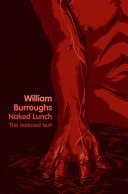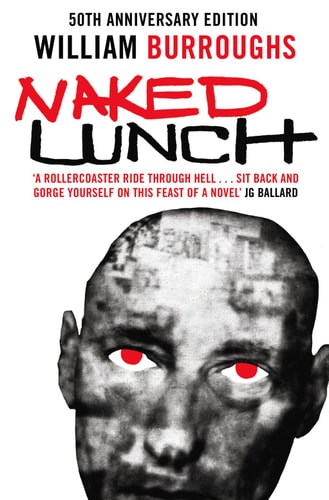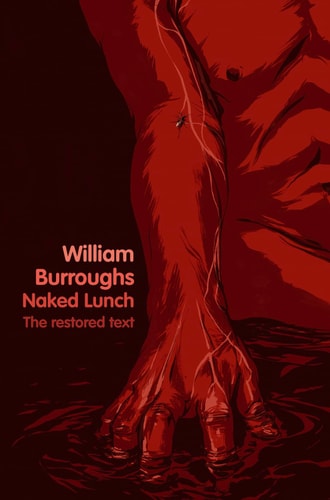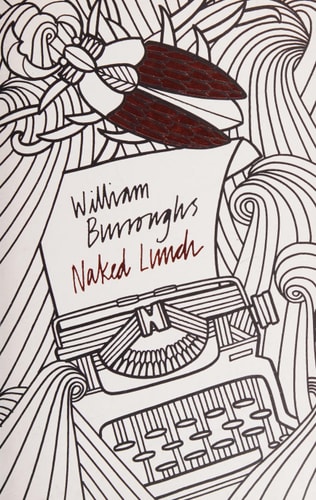
Naked Lunch
0
0
As an Amazon Associate and affiliate partner, Menrva Books earns from qualifying purchases. Learn more
Author Description
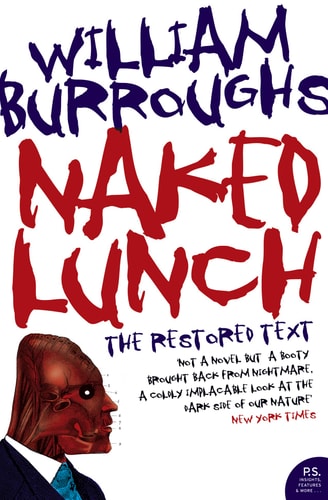
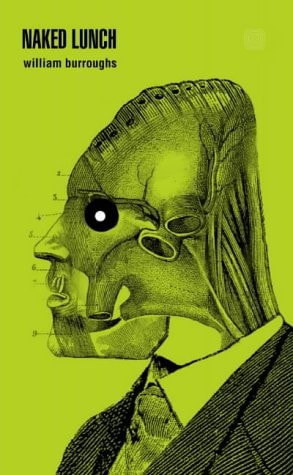
Naked Lunch (sometimes The Naked Lunch) is a novel by William S. Burroughs originally published in 1959. The book is structured as a series of loosely-connected vignettes. Burroughs stated that the chapters are intended to be read in any order. The reader follows the narration of junkie William Lee, who takes on various aliases, from the US to Mexico, eventually to Tangier and the dreamlike Interzone. The vignettes (which Burroughs called "routines") are drawn from Burroughs' own experience in these places, and his addiction to drugs (heroin, morphine, and while in Tangier, "Majoun"—a strong marijuana confection—as well as a German opioid, brand name Eukodol, of which he wrote frequently). The novel was included in Time magazine's "100 Best English-language Novels from 1923 to 2005". In 1991, David Cronenberg released a film of the same name based upon the novel and other Burroughs writings.
Menrva's Summary
THE PULSE
The narrative follows the fragmented, hallucinatory experiences of William Lee, a drug addict navigating a surreal landscape of addiction and paranoia. Lee assumes various aliases as he flees from the United States to Mexico and eventually to the nightmarish, dreamlike locale known as Interzone. His objective is elusive, often obscured by the shifting reality of his surroundings and the physical toll of his chemical dependencies. The text operates as a non-linear series of vignettes, forcing the reader to piece together a reality that is constantly dissolving under the weight of the protagonist's internal and external chaos.
INSIDE THE PAGES
- Non-linear structure consisting of loosely connected vignettes known as routines
- Stream of consciousness prose that shifts rapidly between locations and states of mind
- Satirical depictions of bureaucracy, addiction, and societal control mechanisms
- Surrealist imagery that blurs the line between physical reality and drug-induced hallucination
- Use of the cut-up technique to disrupt traditional narrative flow
- Explicit and often grotesque descriptions of drug use and withdrawal
- A shifting, unreliable narrator who adopts multiple personas throughout the text
- Exploration of the Interzone as a metaphorical space for political and personal decay
THE COLLECTIVE ECHO
This work is widely recognized as a foundational text of the Beat Generation and a significant experiment in mid-century literary form. Critics often highlight its radical departure from conventional storytelling, noting how the non-linear structure mirrors the disorientation of the protagonist's addiction. While some readers find the fragmented nature and explicit content challenging to navigate, others praise the text for its uncompromising vision of societal collapse. The novel remains a subject of intense academic study regarding its influence on postmodern literature and its critique of mid-century American culture. Its status as a cultural touchstone persists despite the polarizing nature of its stylistic choices.
Page Count:
320
Publication Date:
2008-01-01
Publisher:
HarperCollins Publishers
ISBN-10:
0007268416
ISBN-13:
9780007268412
Satire
Surrealism
Experimental
Fiction
Drug abuse
Counterculture
Community Tags
Similar Books