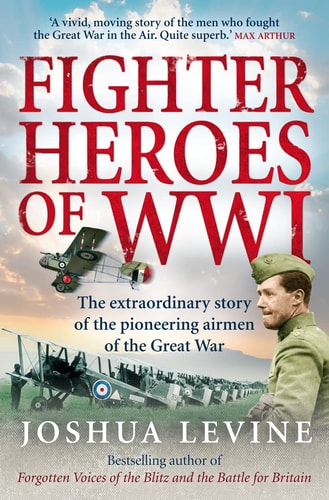
Fighter Heroes of WWI
0
0
As an Amazon Associate and affiliate partner, Menrva Books earns from qualifying purchases. Learn more
Author Description
Few are aware of the risks that the pioneering airmen of World War I took. This oral history conveys the perils of those early days, the thrills of learning to fly, and the horrors of war in the air at a time when pilots carried little defensive armament and no parachutes. The men who joined the Royal Flying Corps in 1914 were the original heroes of flying, treading into unknown territory and paving the way for later aerial combat. They became icons for the soldiers in the trenches, and a stark contrast to the hundreds on the ground fighting faceless hundreds as men fought aircraft to aircraft and man to man?for the first time the air became a battlefield of its own. In 1914 aircraft were a questionable technology, used for only basic reconnaissance. But by 1918, hastened by the terrible war, aircraft were understood to be the future of modern warfare. The war changed flying forever. The Wright brothers' achievements of a mere 10 years earlier and Blériot's crossing of the Channel just a few years before the war seemed a distant memory as aircraft became killing machines?the war becoming the ancestor of the fearsome air wars of later years. The stories are presented to the reader in a frank and open way, revealing the feelings of the men who defended the trenches from above and witnessed the war from a completely different perspective. These first-hand accounts tell the almost totally unknown tale of men who rewrote the rules of military engagement and changed the course of modern history as a result.
Menrva's Summary
THE THESIS
This work investigates the rapid evolution of aerial warfare during World War I through the personal experiences of the pioneering pilots of the Royal Flying Corps. Joshua Levine utilizes a collection of first-hand accounts to document the transition of aviation from a rudimentary reconnaissance tool in 1914 to a sophisticated instrument of combat by 1918. The narrative framework centers on the human element, contrasting the technological infancy of early flight with the brutal realities of becoming the first generation of aerial combatants.
THE SCOPE MAP
What You Will Find
- Primary source interviews and personal accounts from Royal Flying Corps veterans.
- Historical analysis of the technological progression of aircraft between 1914 and 1918.
- Examination of the psychological impact of early aerial combat without parachutes or defensive armament.
- Contextualization of the air war as a distinct theater of operations separate from trench warfare.
THE AUTHORITY PERSPECTIVE
This text provides a focused, accessible entry point into the early history of military aviation by prioritizing the voices of those who lived through the transition. The reliance on oral history offers a grounded perspective on the technical and emotional challenges faced by these early aviators.
Page Count:
374
Publication Date:
2009-01-01
Publisher:
Harpercollins Pub Ltd
ISBN-10:
0007274947
ISBN-13:
9780007274949
History
Biography
Aviation
World War
Military History
Great Britain
Oral History
Community Tags
Similar Books