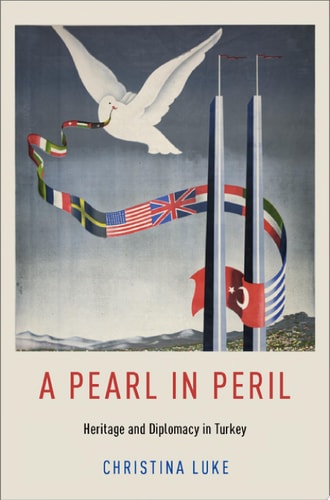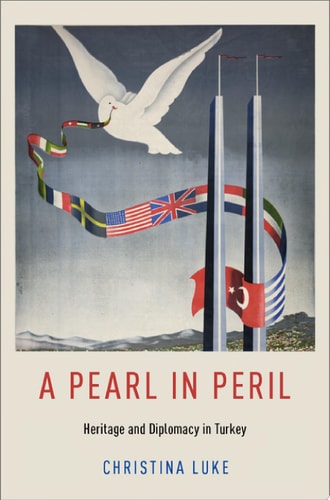
A Pearl in Peril: Heritage and Diplomacy in Turkey
0
0
As an Amazon Associate and affiliate partner, Menrva Books earns from qualifying purchases. Learn more
Author Description
Known as "the Pearl of the Mediterranean," Izmir invokes a city and countryside blessed with good fortune; it is known to many as the homeland of Ephesus, Bergama, and Sardis. Yet, Turkey's third largest city has an especially vexed past. The Greek pursuit of the Megali Idea leveraged Classical history for 19th century political gains, and in so doing also foreshadowed the "Asia Minor Catastrophe." Princeton University's work at Sardis played into the duplicitous agendas of western archaeologists, learned societies, and diplomats seeking to structure heritage policy and international regulations in their favor, from the 1919 Paris Peace Conference to the League of Nations. A Pearl in Peril reveals the voices of those on the ground. It also explores how Howard Crosby Butler, William Hepburn Buckler, and William Berry penetrated the inner circle of world leaders, including Woodrow Wilson, Lloyd George, and Eleftherios Venizelos. On the smoldering ashes of Anatolia's scorched earth, foreign intervention continued apace with plans for large-scale development. A Pearl in Peril tackles the untold story of Julian Huxley's admiration of the US Tennessee Valley Authority's "principals of persuasion" in the context of the industrial landscapes and pursuit of modernity in the Aegean. The promise of UNESCO, too, brought diplomacy dollars deployed to foster "mutual understanding" through preservation programs at Sardis. Yet, from this same pot of money came support for "open intelligence" at the international fairs held in Izmir's Kültürpark, a turnkey battleground of the Cold War. Ironically, it was UNESCO's colossal Abu Simbel project in Egypt that led the US to abandon their preservation initiatives in Turkey. Five decades on, groves of organic olives, marble quarries and gold mines not only threaten the erasure of sacred landscapes, but also ensure the livelihood of local communities. Ultimately, A Pearl in Peril offers a bold assessment of diplomatic practice, perspectives
Menrva's Summary
THE THESIS
This book investigates how the intersection of archaeology, international diplomacy, and industrial development shaped the modern identity and landscape of Izmir, Turkey. Author Christina Luke, an expert in cultural heritage and archaeology, utilizes archival records and historical analysis to demonstrate how Western powers leveraged heritage policy for political and economic gain throughout the 20th century. The work argues that the preservation of sites like Sardis was frequently entangled with broader geopolitical agendas, ranging from the Paris Peace Conference to Cold War intelligence operations.
THE SCOPE MAP
What You Will Find
- Historical analysis of the 1919 Paris Peace Conference and the League of Nations' influence on heritage policy.
- Examination of the roles played by figures such as Howard Crosby Butler, William Hepburn Buckler, and Julian Huxley.
- Investigation into the connection between UNESCO preservation programs and Cold War intelligence activities in Izmir.
- Assessment of contemporary threats to sacred landscapes, including gold mining and industrial development.
Scope Limits
- The text focuses primarily on the Aegean region of Turkey and does not provide a comprehensive history of all Turkish archaeological sites.
- The analysis is centered on the intersection of Western diplomatic intervention and heritage, rather than a purely internal Turkish political history.
THE AUTHORITY PERSPECTIVE
Scholars and readers frequently note the dense, interdisciplinary nature of the prose, which bridges the gap between archaeological practice and international relations. Experts highlight this as a significant contribution to the study of how cultural heritage is utilized as a tool for soft power and geopolitical strategy.
Page Count:
288
Publication Date:
2018-01-01
Publisher:
Oxford University Press
ISBN-10:
0190914416
ISBN-13:
9780190914417
History
Turkey
Middle Eastern
Cultural property protection
Archaeology
Historic Preservation
Diplomacy
Community Tags
Similar Books