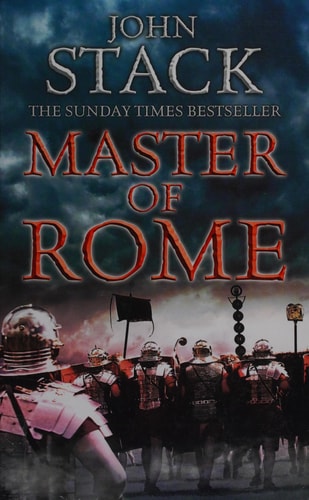
Master of Rome
0
0
As an Amazon Associate and affiliate partner, Menrva Books earns from qualifying purchases. Learn more
Author Description
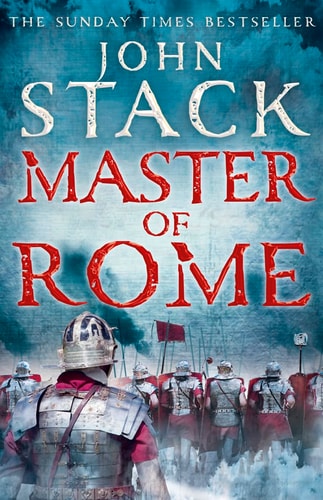
A stirring adventure novel set amid the tumultuous clashes between the Roman and Carthaginian empires, battling for control of the Mediterranean, north Africa and Rome itself.Atticus, the young Greek captain, is now a commander of the growing Roman navy, blockading a port near Tunis, when the Roman legions suffer terrible defeat by the triumphant Carthaginian army, spearheaded by the elephant charges. He and his ships escape together with the main body of the Roman fleet out manoevred by the more skillful Carthaginians and then caught and almost completely annhilated by a terrible storm.Atticus and his crew are among the handful of survivors and being the messenger of this news to the Senta in Rome brings Atticus into political troubles, almost as stormy as the sea. He begins to feel not onlt that a greek will never be accepted by the Romans but also that the behaviour of many, noth politicians and soldiers, is such that he is not sure that he wants to be a Roman.Full of dramatic battles by land and sea, led by tremendous characters on both sides, MASTER OF ROME is a powerful novel, the third in this bestselling series by a born storyteller.
Menrva's Summary
THE PULSE
After the Roman navy suffers a catastrophic defeat at the hands of Carthage, Greek commander Atticus must navigate the treacherous political waters of the Roman Senate while grappling with his own identity. As a foreigner in a Roman command, Atticus faces deep-seated prejudice and the moral decay of the leadership he serves. He struggles to reconcile his duty to the fleet with his growing disillusionment regarding the integrity of the Roman state. The narrative follows his perspective as he attempts to survive both the physical dangers of the Mediterranean conflict and the lethal machinations of the Roman political elite.
INSIDE THE PAGES
- Detailed depictions of ancient naval warfare and ship-to-ship combat tactics
- Exploration of the cultural friction between Greek mercenaries and Roman commanders
- Inclusion of historical figures and events from the First Punic War
- High-stakes political intrigue within the Roman Senate
- Vivid descriptions of the environmental hazards faced by ancient fleets
- Focus on the logistical challenges of maintaining a navy during wartime
- Character-driven examination of loyalty and national identity
- Pacing that alternates between intense maritime action and tense diplomatic maneuvering
THE COLLECTIVE ECHO
This novel functions as a classic entry in the historical military fiction genre, prioritizing the mechanics of ancient warfare and the strategic realities of the Punic Wars. The narrative structure emphasizes the isolation of the protagonist, using his status as an outsider to critique the rigid social hierarchies of the Roman Republic. Readers familiar with the series will find the focus on naval logistics and the brutal nature of Mediterranean combat to be consistent with the author's established style. The text avoids romanticizing the period, instead highlighting the political instability and moral ambiguity that defined the era.
Page Count:
373
Publication Date:
2011-01-01
Publisher:
HarperCollins Publishers Limited
ISBN-10:
0007285272
ISBN-13:
9780007285273
Adventure
Historical Fiction
War
War & Military
Fiction
Sea Stories
Ancient
Military
Historical