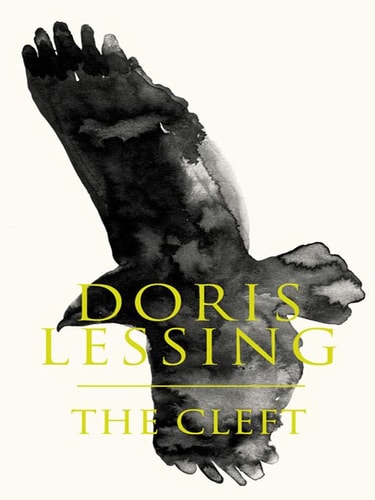
The Cleft
0
0
As an Amazon Associate and affiliate partner, Menrva Books earns from qualifying purchases. Learn more
Author Description
Doris Lessing, one of England's finest living novelists, invites us to imagine a mythical society free from sexual intrigue, free from jealousy, free from petty rivalries: a society free from men.An old Roman senator, contemplative at his late stage of life, embarks on what will likely be his last endeavour: the retelling of the story of human creation. He recounts the history of the Clefts, an ancient community of women living in an Edenic, coastal wilderness, confined within the valley of an overshadowing mountain. The Clefts have no need, or knowledge, of men – childbirth is controlled, like the tides that lap around their feet, through the cycles of the moon, and their children are always female. But with the unheralded birth of a strange, new child – a boy – the harmony of their community is suddenly thrown into jeopardy. At first, in their ignorance, the Clefts are awestruck by this seemingly malformed child, but as more and more of these threateningly unfamiliar males appear, now unfavourably nicknamed Squirts, they are rejected, and are exposed on the nearby mountainside; sacrificed to the patrolling eagles overhead, the sentinels of their female haven. Unbeknownst to the Clefts, however, these baby males survive, aided by the very eagles sent to kill them, and thrive on their own on the other side of the mountain. It is not until an unusually curious young Cleft named Maire goes beyond the geographical, and emotional, divide of the mountain that this disquieting fact is uncovered – a discovery that forces the Clefts to accept and realign themselves to the prospect of a now shared world, and the possible vengeance of the wronged males. In this fascinating and beguiling novel, Lessing confronts head-on the themes that inspired much of her early writing: how men and women, two similar and yet thoroughly distinct creatures, manage to live side by side in the world, and how the specifics of gender affect every aspect of our existence.
Menrva's Summary
THE PULSE
The arrival of a male child in an all-female, primordial society disrupts a long-standing, harmonious existence and forces a confrontation between two gendered worlds. The narrative is framed as the historical account of an aging Roman senator who seeks to document the origins of humanity through the lens of the Clefts, a community of women living in isolation. The protagonist, a curious young woman named Maire, acts as the bridge between the sheltered valley of the Clefts and the rugged, unknown territory where the rejected males have established their own society. The story explores the physical and social consequences of this divide, examining how the emergence of sexual difference challenges the established order of the Clefts' Edenic life.
INSIDE THE PAGES
- Epistolary-style framing device featuring a Roman senator as the narrator
- Exploration of gender dynamics and the origins of sexual difference
- Mythic, fable-like tone that emphasizes archetypal character roles
- Contrast between the coastal, sheltered valley and the harsh, mountainous wilderness
- Examination of societal evolution and the transition from matriarchal isolation to gendered coexistence
- Use of biological and environmental metaphors to describe human development
- Focus on the psychological impact of discovery and the breaking of long-held taboos
- Non-linear reflection on the nature of history and the reliability of oral tradition
THE COLLECTIVE ECHO
This novel is characterized by its speculative approach to the origins of gender and the social structures that arise from sexual difference. The narrative style reflects Lessing's interest in anthropological themes, presenting a fable that avoids simple moralizing in favor of a complex examination of human nature. Readers often note the detached, observational tone of the Roman narrator, which adds a layer of distance to the mythic events described. The work invites reflection on how historical narratives are constructed and how the separation of genders has shaped the trajectory of human civilization. The text remains a significant exploration of the tensions between biological necessity and social organization.
Page Count:
288
Publication Date:
2008-01-01
Publisher:
HarperCollins
ISBN-10:
0007283164
ISBN-13:
9780007283163
Fiction
Literary Fiction
Creation
Speculative Fiction
Literature & Fiction
Fiction
Man-woman relationships
Literary
New York
Fiction psychological
Sex Psychology
Mythological Fiction
Anthropological Fiction
Genre Fiction
Women
Irish fiction
Feminist fiction
Literature
Community Tags
Other Editions(3)


Similar Books




Reader Comments
Share Your Thoughts
No comments yet. Be the first to share your thoughts!