London’s Natural History
0
0
As an Amazon Associate and affiliate partner, Menrva Books earns from qualifying purchases. Learn more
Author Description
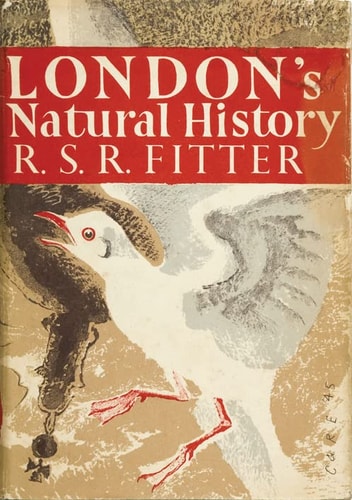
London's Natural History describes how the spread of man’s activities has affected the plants and animals in them, destroying some and creating others. This edition is exclusive to newnaturalists.comUp to now there has been no real attempt to write a comprehensive history of a great human community in terms of the animals and plants it has displaced, changed, moved and removed, introduced, conserved, lost or forgotten. In selecting London as an area for such study Mr. Fitter, himself a Londoner, takes the world’s largest aggregation of human beings living in a single community and in many ways the most interesting perhaps of all regions of the British Isles, and shows how the spread of man’s activities has affected the plants and animals in them, destroying some, creating others.Wild birds like the rook and jackdaw have been driven further from St. Paul’s by the relentless advance of London’s tide of bricks, others like the wood pigeon and moorhen have moved in to colonise those oases of greenery, the parks. The influence of international trade has brought many new creatures to the Port of London, most of them undesirable.
Menrva's Summary
THE THESIS
This work investigates the complex ecological transformation of London, questioning how the expansion of a massive human urban center has fundamentally altered, displaced, and introduced flora and fauna over centuries. R. S. R. Fitter, a naturalist with deep ties to the city, utilizes historical observation and biological survey data to document the interplay between urban development and the natural world. The text provides a framework for understanding the city not merely as a concrete landscape, but as a dynamic environment where human activity dictates the survival and migration of species.
THE SCOPE MAP
What You Will Find
- Historical analysis of London's urban expansion and its impact on local biodiversity.
- Case studies of specific species, such as the rook, jackdaw, wood pigeon, and moorhen, and their adaptation to urban environments.
- Examination of the influence of international trade and port activity on the introduction of non-native species.
- Documentation of the role of parks and green spaces as critical oases for displaced wildlife.
THE AUTHORITY PERSPECTIVE
This text serves as a foundational study in urban ecology, offering a dense and methodical look at the environmental history of a major metropolis. The author's focus on the specific biological consequences of human infrastructure provides a rigorous, specialized perspective for readers interested in the intersection of geography and natural science.
Page Count:
0
Publication Date:
2009-07-14
Publisher:
Collins
ISBN-10:
0007307535
ISBN-13:
9780007307531
Politics
History
Natural History
Science & Math
Anthropology
Biology
Ecology
NATURE Ecology
Environmental History
Earth Sciences
Social Psychologists
Urban Studies
London
Cultural
Community Tags
Similar Books