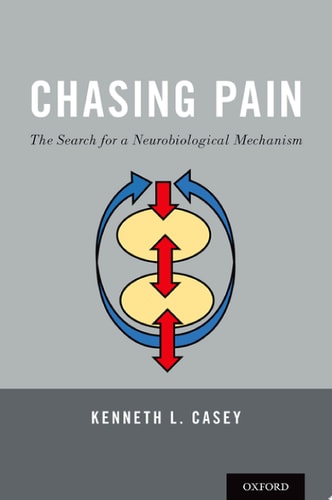
Chasing Pain: The Search for a Neurobiological Mechanism
0
0
As an Amazon Associate and affiliate partner, Menrva Books earns from qualifying purchases. Learn more
Author Description
Conceptual models of how pain is created influence medical practice, neuroscientific research, and philosophical ideas about pain and other neurological functions. Given the broad scope of pain experiences, realistic models of pain neurobiology must consider the correlation between pain and tissue damage and how it is strongly affected by neurological disease, emotionally compelling circumstances, and by complex cognitive processes. Recent discoveries have made it clear that both sensory and affective systems are strongly modulated by activity in other sensory pathways and by affective and cognitive processes originating in the brain. As a result, pain should then be conceived as emerging from the conjoint activity of both sensory and affective neural systems, each becoming a target for pain treatment.Historically, pain has been conceived as emerging either from an undefined pattern of neural activity or from anatomically and physiologically unique structures in the nervous system. Observations made during the early and mid- 20th century showed that pain and pain-like behaviors normally require not only sensory detectors of noxious events (called nociceptors) but also brain affective (hedonic) mechanisms that generate emotional experience and expression. In Chasing Pain, pain specialists and neuroscientists will find a thoughtful discussion of the neuroscientific and clinical evidence that has led to contemporary concepts of pain neurobiology and how pain might emerge from neuronal activity. Written in a concise and annotated format, Doctor Kenneth Casey reveals that while contemporary research has greatly enriched our model of pain neurobiology, several important and therapeutically challenging clinical conditions remain poorly understood.
Menrva's Summary
THE THESIS
This book investigates the neurobiological mechanisms of pain by examining how sensory and affective neural systems interact to produce the human experience of pain. Dr. Kenneth L. Casey, a specialist in the field, synthesizes historical and contemporary clinical evidence to challenge older, reductionist models of pain. He argues that pain is not merely a response to tissue damage but a complex emergent property of brain activity that requires a dual-focus approach for effective medical treatment.
THE SCOPE MAP
What You Will Find
- Historical evolution of pain theories from the 20th century to the present.
- Analysis of the interaction between nociceptors and affective brain mechanisms.
- Discussion of how cognitive and emotional processes modulate sensory pathways.
Scope Limits
- The text does not provide a comprehensive clinical manual for treating specific chronic pain conditions.
- It does not cover non-neurological or purely psychological pain management techniques.
THE AUTHORITY PERSPECTIVE
Experts recognize this work as a concise, high-level synthesis of neurobiological pain theory suitable for researchers and clinicians. Readers frequently note the academic density of the prose, which assumes a foundational understanding of neurological structures and clinical terminology.
Page Count:
192
Publication Date:
2019-01-01
Publisher:
Oxford University Press
ISBN-10:
0190920084
ISBN-13:
9780190920081
Science
Neuroscience
Allied Health
Neurobiology
Clinical Research
Neurology
Anesthesiology
Pain
Medical
Community Tags
Similar Books