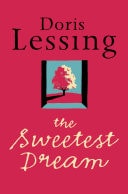
The Sweetest Dream
0
0
As an Amazon Associate and affiliate partner, Menrva Books earns from qualifying purchases. Learn more
Author Description
Nobel Prize for Literature winner Doris Lessing tackles the 1960s and their legacy head-on in one of her most involving, personal, political novels.It’s the morning of the 1960s and it’s suppertime at Freedom Hall, the most welcoming household in north London. Frances Lennox stands at her stove, preparing another feast before ladling it out to the youthful crew assembled around her hospitable table – here are her two sons, smarting at their upbringing but beginning to absorb their mother’s lessons. Around them are ranged their schoolfriends and girlfriends and ex-friends and new friends fresh off the street. The feast begins. Wine and talk flow. Everything is being changed and being challenged.But what is being tolerated? And where will it end? Over there in the corner is Frances’s ex-husband, Comrade Johnny, who delivers his rousing tirades, then laps up the adolescent adulation before disappearing into the night to evade the clutches of his responsibilities. Upstairs sits Johnny’s exiled mother, funding all, but finding she can embrace only one lost little girl – Sylvia, who has to travel to Africa, to newly independent Zimlia, to find out who she is and what she wants. And what of the Africans, what will they tolerate?These are the people dreaming the 1960s into being, and the people who, on the morning after all that dreaming, woke to find they were the ones who had to clear up and make good.
Menrva's Summary
THE PULSE
The narrative centers on the shifting ideals and domestic instability of a 1960s London household as the radical optimism of the era collides with the harsh realities of personal responsibility. Frances Lennox acts as the anchor for a revolving door of young activists, disillusioned sons, and her own charismatic but irresponsible ex-husband, Johnny. As the household dynamic fractures, the story follows the characters through their political awakenings and the subsequent disillusionment that follows the decade's end. The narrative moves between the claustrophobic intensity of the London home and the stark, transformative landscape of post-colonial Africa, tracking how these individuals attempt to reconcile their grand dreams with the mundane demands of survival and maturity.
INSIDE THE PAGES
- Multi-generational character study focusing on the legacy of 1960s idealism
- Exploration of the tension between domestic duty and political activism
- Non-linear progression that spans from the height of the 1960s into the subsequent decades
- Geographic shift from London to the fictionalized African nation of Zimlia
- Examination of the psychological impact of absent or narcissistic parental figures
- Use of the household as a microcosm for broader societal shifts
- Focus on the transition from youthful rebellion to adult accountability
- Detailed depiction of the social and political climate of the mid-20th century
THE COLLECTIVE ECHO
This work is characterized by its analytical approach to the social upheavals of the 1960s and the long-term consequences of that era's radicalism. The narrative suggests a focus on the friction between the performative nature of political idealism and the practical requirements of sustaining a family. Readers likely encounter a dense, character-driven examination of how personal choices ripple through generations, particularly through the lens of the Lennox family. The prose reflects the author's interest in the intersection of private lives and public history, offering a sober reflection on the morning after the dream of social transformation.
Page Count:
496
Publication Date:
2001-09-03
Publisher:
HarperCollins Publishers
ISBN-10:
0007322771
ISBN-13:
9780007322770
Historical Fiction
Literary Fiction
Coming of Age
London England
Irish fiction
Thrillers
South Africa
Action Adventure
Mothers and daughters
Fiction
Political fiction
Short Stories
Political
Literary
Social Commentary