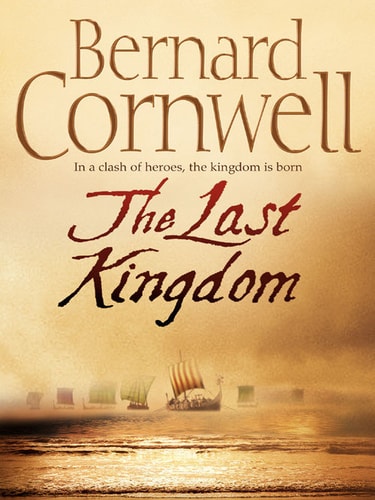
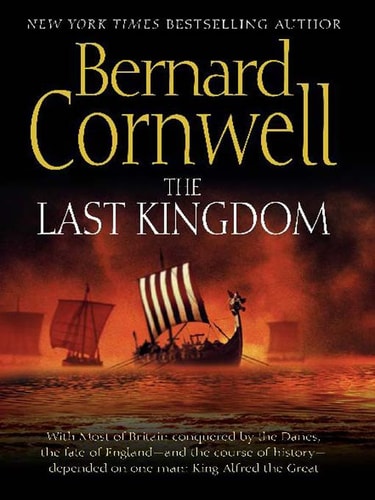
The Last Kingdom
0
0
As an Amazon Associate and affiliate partner, Menrva Books earns from qualifying purchases. Learn more
Author Description
From Bernard Cornwell, the New York Times bestselling author whom the Washington Post calls "perhaps the greatest writer of historical adventure novels today," comes a saga of blood, rage, fidelity, and betrayal that brings to center stage King Alfred the Great, one of the most crucial (but oft-forgotten) figures in English history. It is King Alfred and his heirs who, in the ninth and tenth centuries, with their backs against the wall, fought to secure the survival of the last outpost of Anglo-Saxon culture by battling the ferocious Vikings, whose invading warriors had already captured and occupied three of England's four kingdoms.Bernard Cornwell's epic novel opens in A.D. 866. Uhtred, a boy of ten and the son of a nobleman, is captured in the same battle that leaves his father dead. His captor is the Earl Ragnar, a Danish chieftain, who raises the boy as his own, teaching him the Viking ways of war. As a young man expected to take part in raids and bloody massacres against the English, he grapples with divided loyalties -- between Ragnar, the warrior he loves like a father, and Alfred, whose piety and introspection leave him cold. It takes a terrible slaughter and the unexpected joys of marriage for Uhtred to discover his true allegiance -- and to rise to his greatest challenge.In Uhtred, Cornwell has created perhaps his richest and most complex protagonist, and through him, he has magnificently evoked an era steeped in dramatic pageantry and historical significance. For if King Alfred fails to defend his last kingdom, England will be overrun, and the entire course of history will change.
Menrva's Summary
THE PULSE
Caught between the culture of his birth and the people who raised him, Uhtred of Bebbanburg must navigate the violent birth of England as a unified nation. Uhtred, a Saxon nobleman captured and raised by Danes, finds his loyalties fractured when he is forced to choose between his adoptive Viking father and the pious, calculating King Alfred. The narrative, presented through Uhtred's retrospective first-person perspective, details the brutal physical realities of ninth-century warfare and the complex political maneuvering required to survive in a fractured land. As the Viking invaders systematically dismantle the Anglo-Saxon kingdoms, Uhtred must reconcile his warrior instincts with the shifting political landscape of a kingdom on the brink of extinction.
INSIDE THE PAGES
- First-person retrospective narration providing a seasoned warrior's perspective on historical events.
- Detailed depictions of shield-wall combat and ninth-century military tactics.
- Exploration of the cultural friction between pagan Viking traditions and Christian Anglo-Saxon society.
- Focus on the political evolution of England under the reign of Alfred the Great.
- Character-driven conflict centered on the tension between blood ties and chosen allegiances.
- Vivid descriptions of the harsh, unforgiving landscape of early medieval Britain.
- Integration of historical figures into a fictionalized narrative framework.
- Pacing characterized by alternating periods of strategic planning and visceral, high-stakes battle sequences.
THE COLLECTIVE ECHO
This novel is widely recognized for its meticulous attention to the mechanics of early medieval warfare and its ability to humanize the political figures of the ninth century. Readers often highlight the protagonist's internal conflict as the primary engine of the narrative, noting how his dual identity allows for a nuanced view of both the Saxon and Viking cultures. The prose is noted for its direct, unadorned style, which mirrors the brutal nature of the era it depicts. Critics frequently point to the author's ability to balance large-scale historical events with the intimate, often violent experiences of a single soldier. The work is regarded as a foundational entry in the genre of historical military fiction, setting a high standard for period accuracy and narrative momentum.
Page Count:
500
Publication Date:
2004-10-01
Publisher:
HarperCollins
ISBN-10:
0007338813
ISBN-13:
9780007338818
Adventure
History
Historical Fiction
Historical
Thrillers
Fiction
Action Adventure
Anglo-Saxon
Family Saga
Classics
War
Medieval
Genre Fiction
War & Military
Great Britain
Literature & Fiction
Literary
Vikings
Community Tags
Other Editions(9)




Similar Books






Reader Comments
Share Your Thoughts
No comments yet. Be the first to share your thoughts!