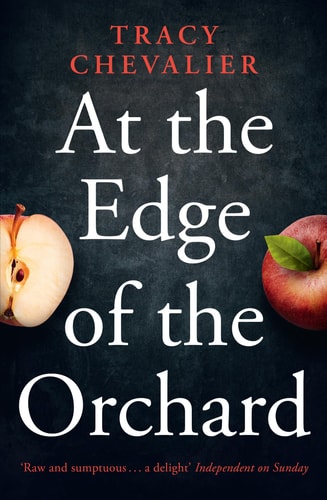
At the Edge of the Orchard
0
0
As an Amazon Associate and affiliate partner, Menrva Books earns from qualifying purchases. Learn more
Author Description
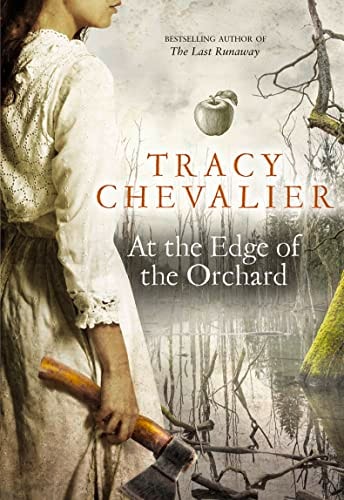
1838: James and Sadie Goodenough have settled where their wagon got stuck - in the muddy, stagnant swamps of northwest Ohio. They and their five children work relentlessly to tame their patch of land, buying saplings from a local tree man known as John Appleseed so they can cultivate the fifty apple trees required to stake their claim on the property. But the orchard they plant sows the seeds of a long battle. James loves the apples, reminders of an easier life back in Connecticut; while Sadie prefers the applejack they make, an alcoholic refuge from brutal frontier life. 1853: Their youngest child Robert is wandering through Gold Rush California. Restless and haunted by the broken family he left behind, he has made his way alone across the country. In the redwood and giant sequoia groves he finds some solace, collecting seeds for a naturalist who sells plants from the new world to the gardeners of England. But you can run only so far, even in America, and when Robert's past makes an unexpected appearance he must decide whether to strike out again or stake his own claim to a home at last.
Menrva's Summary
THE PULSE
A fractured family struggles to survive the harsh realities of the American frontier, their lives defined by the apple orchard that both sustains and divides them. James and Sadie Goodenough attempt to carve a life out of the Ohio wilderness, but their conflicting desires for the land—one seeking stability through fruit, the other seeking oblivion through alcohol—shatter their household. Years later, their son Robert flees this wreckage for the promise of California, attempting to outrun his history while working as a seed collector among the giant sequoias. The narrative shifts between these two distinct landscapes, utilizing a dual-timeline structure to examine how the environment shapes the human spirit and how the past inevitably catches up to the present.
INSIDE THE PAGES
- Dual-timeline narrative structure alternating between 1838 Ohio and 1853 California
- Historical cameos including the figure of John Appleseed
- Detailed descriptions of 19th-century agricultural practices and seed collecting
- Exploration of the psychological impact of frontier isolation
- Contrast between the domesticity of an orchard and the wildness of redwood forests
- Themes of alcoholism and its effect on family cohesion
- Focus on the physical labor required to stake land claims
- Character-driven study of generational trauma and migration
THE COLLECTIVE ECHO
This work is characterized by its meticulous attention to the historical details of the American landscape and the internal lives of its protagonists. The narrative style emphasizes the slow, deliberate pace of the frontier experience, mirroring the growth of the trees that serve as the central metaphor for the family's struggle. Readers often note the stark contrast between the claustrophobic, muddy swamps of Ohio and the expansive, awe-inspiring scale of the California redwoods. The book functions as a study of how individuals attempt to plant roots in soil that is inherently hostile to their survival. It remains a quiet, atmospheric exploration of the costs of ambition and the difficulty of escaping one's origins.
Page Count:
336
Publication Date:
2017-01-01
Publisher:
HarperCollins Publishers Limited
ISBN-10:
0007350406
ISBN-13:
9780007350407
Historical Fiction
Fiction
Nature
Fiction
Sagas
Women
Family Saga
Gold Rush
Historical
Family life
Literary