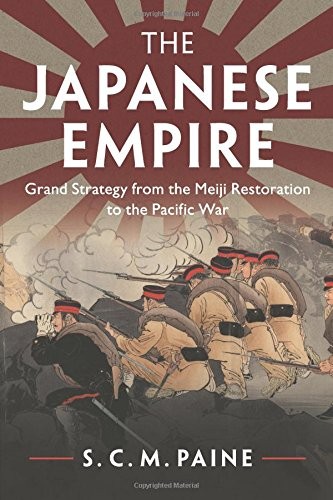
The Japanese Empire: Grand Strategy from the Meiji Restoration to the Pacific War
0
0
As an Amazon Associate and affiliate partner, Menrva Books earns from qualifying purchases. Learn more
Author Description
The Japanese experience of war from the late-nineteenth to the mid-twentieth century presents a stunning example of the meteoric rise and shattering fall of a great power. As Japan modernized and became the one non-European great power, its leaders concluded that an empire on the Asian mainland required the containment of Russia. Japan won the First Sino-Japanese War (1894-5) and the Russo-Japanese War (1904-5) but became overextended in the Second Sino-Japanese War (1931-45), which escalated, with profound consequences, into World War II. A combination of incomplete institution building, an increasingly lethal international environment, a skewed balance between civil and military authority, and a misunderstanding of geopolitics explains these divergent outcomes. This analytical survey examines themes including the development of Japanese institutions, diversity of opinion within the government, domestic politics, Japanese foreign policy and China's anti-Japanese responses. It is an essential guide for those interested in history, politics and international relations
Menrva's Summary
THE THESIS
This book investigates the grand strategy of the Japanese Empire from its Meiji Restoration through World War II, analyzing the factors behind its rise and fall. The author, S. C. M. Paine, examines how Japan's modernization led to imperial ambitions, particularly the need to contain Russia, and how victories in early wars contrasted with overextension in later conflicts. The analysis explores themes of institutional development, internal government diversity, domestic politics, foreign policy, and China's responses, seeking to explain divergent outcomes through incomplete institution building, a challenging international environment, civil-military imbalance, and geopolitical misunderstandings.
THE SCOPE MAP
- The development of Japanese institutions from the late 19th century.
- The diversity of opinion within the Japanese government regarding foreign policy.
- The role of domestic politics in shaping Japanese foreign policy.
- An examination of Japanese foreign policy and China's anti-Japanese responses.
- Analysis of the geopolitical factors contributing to Japan's rise and fall.
- Case studies of key conflicts including the Sino-Japanese Wars and the Russo-Japanese War.
THE AUTHORITY PERSPECTIVE
The book is presented as an analytical survey examining the grand strategy of the Japanese Empire. Its scope covers a critical period of Japanese history, from modernization to its involvement in World War II. The author's approach appears to be thematic, focusing on institutional development, political dynamics, and geopolitical considerations. This suggests a work intended for readers interested in history, politics, and international relations, offering insights into the complexities of great power emergence and decline.
Page Count:
218
Publication Date:
2017-01-01
ISBN-10:
1107676169
ISBN-13:
9781107676169
Politics
History
Non-Fiction
International relations
Community Tags
Similar Books