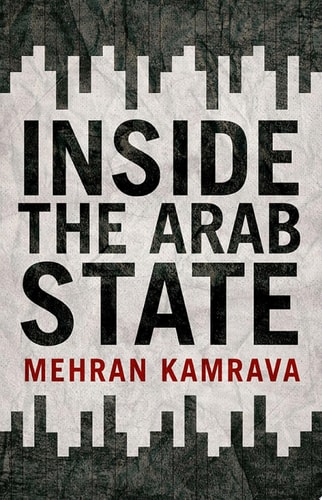
Inside the Arab State
0
0
As an Amazon Associate and affiliate partner, Menrva Books earns from qualifying purchases. Learn more
Author Description
The 2011 Arab uprisings and their subsequent aftermath have thrown into question some of our long-held assumptions about the foundational aspects of the Arab state. While the regional and international consequences of the uprisings continue to unfold with great unpredictability, their ramifications for the internal lives of the states in which they unfolded are just as dramatic and consequential. States historically viewed as models of strength and stability have been shaken to their foundations. Borders thought impenetrable have collapsed; sovereignty and territoriality have been in flux.This book examines some of the central questions facing observers and scholars of the Middle East concerning the nature of power and politics before and after 2011 in the Arab world. The focus of the book revolves around the very nature of politics and the exercise of power in the Arab world, conceptions of the state, its functions and institutions, its sources of legitimacy, and basic notions underlying it such as sovereignty and nationalism.Inside the Arab State adopts a multi-disciplinary approach, examining a broad range of political, economic, and social variables. It begins with an examination of politics, and more specifically political institutions, in the Arab world from the 1950s on, tracing the travail of states, and the wounds they inflicted on society and on themselves along the way, until the eruption of the 2011 uprisings. The uprisings, the states' responses to them, and efforts by political leaders to carve out for themselves means of legitimacy are also discussed, as are the reasons for the emergence and rise of Daesh and the Islamic State. Power, I argue, and increasingly narrow conceptions of it in terms of submission and conformity, remains at the heart of Arab politics, popular protests and yearnings for change notwithstanding. Much has changed in the Arab world over the last several decades. But even more has stayed the same.
Menrva's Summary
THE THESIS
This book investigates the fundamental nature of power, legitimacy, and institutional stability within the Arab state, specifically examining how these concepts shifted before and after the 2011 uprisings. Mehran Kamrava, a professor of government, utilizes a multi-disciplinary framework to analyze the historical trajectory of Arab states from the 1950s to the present. He argues that despite significant regional changes, the core mechanisms of power—defined largely by submission and conformity—have remained remarkably consistent throughout the decades.
THE SCOPE MAP
What You Will Find
- Historical analysis of political institutions in the Arab world from the 1950s to the post-2011 era.
- Examination of state legitimacy, sovereignty, and nationalism as conceptual frameworks.
- Analysis of the emergence and rise of non-state actors like Daesh and the Islamic State.
- Evaluation of state responses to popular protests and societal pressures.
Scope Limits
- The text does not provide a comprehensive country-by-country breakdown of every Arab nation.
- It does not offer predictive models for future regional stability or specific policy prescriptions.
THE AUTHORITY PERSPECTIVE
Scholars and regional experts recognize this work as a significant contribution to the study of Middle Eastern political structures. Readers frequently note the academic density of the prose, which is best suited for those already familiar with the historical and political context of the region.
Page Count:
320
Publication Date:
2018-01-01
Publisher:
Oxford University Press
ISBN-10:
0190934913
ISBN-13:
9780190934910
History
Middle Eastern
Government
Arab Countries
International relations
Community Tags
Similar Books