Our Gigantic Zoo: A German Quest to Save the Serengeti
0
0
As an Amazon Associate and affiliate partner, Menrva Books earns from qualifying purchases. Learn more
Author Description
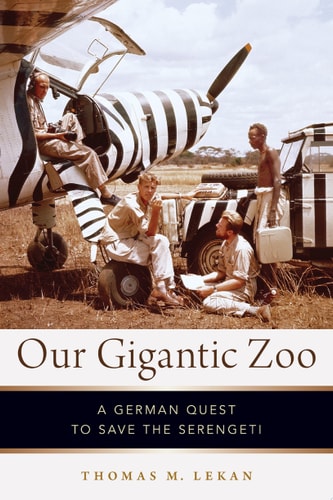
How did the Seregenti become an internationally renowned African conservation site and one of the most iconic destinations for a safari?In this book, Thomas M. Lekan illuminates the controversial origins of this national park by examining how Europe's greatest wildlife conservationist, former Frankfurt Zoo director and Oscar-winning documentarian Bernhard Grzimek, popularized it as a global destination. In the 1950s, Grimzek and his son Michael began a quest to save the Serengeti from modernization and "overpopulation" by remaking an imperial game reserve into a gigantic zoo for the earth's last great mammals. Grzimek, well-known to German audiences through his long-running television program, A Place for Animals, used the film Seregenti Shall Not Die to convince ordinary Europeans that they could save nature. Yet their message sidestepped the uncomfortable legacies of German colonial exploitation in the region that had endangered animals and excluded local people. After independence, Grzimek raised funds, brokered diplomatic favors, and convinced German tourists to book travel packages--all to persuade Tanzanian leader Julius Nyerere that wildlife would fuel the young nation's economic development. Grzimek helped Tanzania to create almost a dozen new national parks by 1975, but wooing tourists conflicted with rights of the Maasai and other African communities to inhabit the landscape on their own terms. Grzimek's global priorities eventually clashed with Nyerere's nationalist ones, as a more self-assertive Tanzania resented conservationists' meddling and failed promises.A story that demonstrates the conflicts between international conservation, nature tourism, decolonization, and national sovereignty, Our Gigantic Zoo explores the legacy of the man who portrayed himself as a second Noah, called on a sacred mission to protect the last vestiges of paradise for all humankind.
Menrva's Summary
THE THESIS
This book investigates how the Serengeti was transformed into a global icon of wildlife conservation through the efforts of German filmmaker and zoo director Bernhard Grzimek, and the subsequent tensions this created with Tanzanian national sovereignty. Thomas M. Lekan, a professor of history, utilizes archival research, film analysis, and diplomatic records to argue that Grzimek’s vision of a 'gigantic zoo' often ignored the colonial history of the region and the rights of local African communities. The work examines the intersection of post-war European environmentalism, the rise of international tourism, and the complexities of decolonization in East Africa.
THE SCOPE MAP
What You Will Find
- Analysis of the 1950s conservation movement in East Africa
- Examination of the influence of the film 'Serengeti Shall Not Die' and the television program 'A Place for Animals'
- Historical account of the diplomatic relationship between Bernhard Grzimek and Tanzanian leader Julius Nyerere
- Documentation of the displacement of Maasai communities for the creation of national parks
Scope Limits
- The book does not provide a comprehensive biological study of Serengeti wildlife species
- It does not focus on modern-day conservation efforts post-1975
THE AUTHORITY PERSPECTIVE
Historians and environmental scholars recognize this text as a critical examination of the colonial underpinnings of Western-led conservation movements. Readers frequently note the academic rigor of the research and the author's ability to balance the narrative of individual ambition with broader geopolitical shifts.
Page Count:
348
Publication Date:
2019-01-01
Publisher:
Oxford University Press
ISBN-10:
0190935367
ISBN-13:
9780190935368
Biography
History
Nature
Travel -- History
African history
Conservation
European History
Zoology
Community Tags
Similar Books