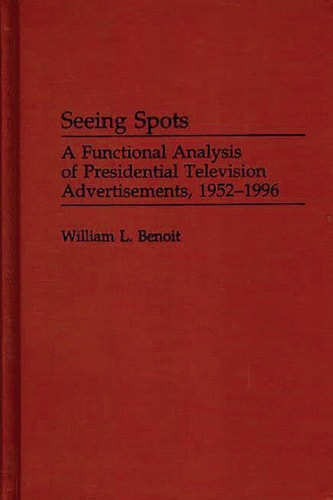
Seeing Spots: A Functional Analysis of Presidential Television Advertisements, 1952-1996
0
0
As an Amazon Associate and affiliate partner, Menrva Books earns from qualifying purchases. Learn more
Author Description
Benoit provides a comprehensive analysis of presidential television spots from every campaign that used this important message form, from the 1952 campaign through the last national campaign in 1996. More than 1, 600 presidential spots are analyzed, from both primary and general campaigns. Republican, Democratic, and third party candidate advertisements are analyzed. He uses the Functional Theory of Political Campaign Discourse, analyzing themes in spots as acclaims (self-praise), attacks (criticism), and defenses (responses to attacks). Themes are classified according to topic. Each of these topics is broken down further (policy: past deeds, future plans, general goals; character: personal qualities, leadership ability, ideals). Contrasts are made between spots from Republicans and Democrats as well as third parties, incumbents and challengers, and winners and losers. The spots from candidates who led, trailed, or were in close races also are contrasted. Spots are becoming more negative over time, Benoit concludes, in both primary and general campaigns. General campaigns are more negative than primary campaigns, Democrats are more negative than Republicans, and challengers are more negative than incumbents. There are no differences between winners and losers. However, candidates who trailed throughout the campaign were most negative, while candidates in close races were most positive. An important analysis for scholars and researchers in political communication and American presidential politics.
Menrva's Summary
THE THESIS
This book provides a comprehensive functional analysis of presidential television advertisements from 1952 to 1996. William L. Benoit, an expert in political communication, examines over 1,600 spots from primary and general campaigns, including those from Republican, Democratic, and third-party candidates. The analysis employs the Functional Theory of Political Campaign Discourse, categorizing themes as acclaims, attacks, and defenses, and further breaking down topics by policy and character. Benoit contrasts these themes across various candidate types and campaign situations to reveal trends in political advertising.
THE SCOPE MAP
- Analysis of over 1,600 presidential television spots from 1952-1996.
- Inclusion of advertisements from Republican, Democratic, and third-party candidates.
- Application of the Functional Theory of Political Campaign Discourse.
- Categorization of themes into acclaims (self-praise), attacks (criticism), and defenses (responses to attacks).
- Detailed topic breakdown within themes, including policy (past deeds, future plans, general goals) and character (personal qualities, leadership ability, ideals).
- Comparative analysis of spots based on party affiliation, incumbency status, and electoral success (winners vs. losers).
- Examination of contrasts between candidates leading, trailing, or in close races.
- Conclusion on the increasing negativity of spots over time and specific patterns of negativity across campaign types and candidate positions.
THE AUTHORITY PERSPECTIVE
This book is regarded as an important analysis for scholars and researchers in political communication and American presidential politics. The study meticulously applies a theoretical framework to a vast dataset of campaign advertisements, offering empirical insights into the evolution and characteristics of political messaging. Benoit's conclusions highlight significant trends, such as the increasing negativity in presidential spots and specific differences in messaging strategies between parties and candidate positions. The work provides a detailed, data-driven perspective on how candidates have used television to communicate with the electorate.
Page Count:
256
Publication Date:
1999-07-30
Publisher:
Bloomsbury Publishing
ISBN-10:
0313003254
ISBN-13:
9780313003257
Politics
History
Non-Fiction
Campaign Strategy
Discourse Analysis
Media Analysis
Community Tags
Similar Books