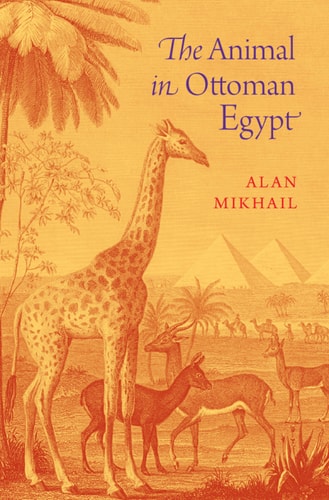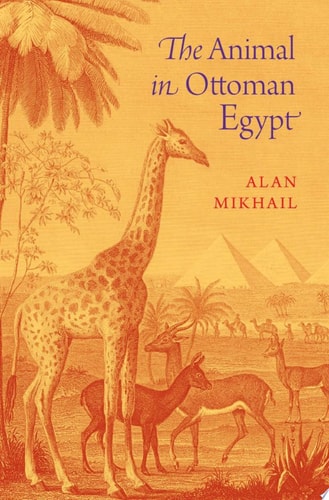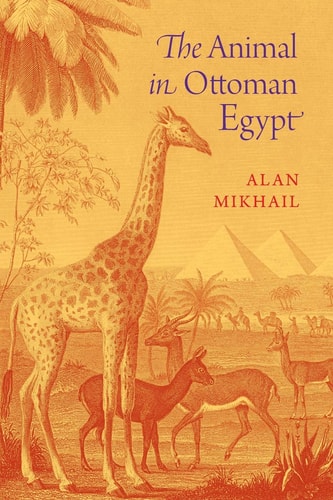
The Animal in Ottoman Egypt
0
0
As an Amazon Associate and affiliate partner, Menrva Books earns from qualifying purchases. Learn more
Author Description
Since humans first emerged as a distinct species, they have eaten, fought, prayed, and moved with other animals. In this stunningly original and conceptually rich book, historian Alan Mikhail puts the history of human-animal relations at the center of transformations in the Ottoman Empire from the sixteenth to the nineteenth centuries.Mikhail uses the history of the empire's most important province, Egypt, to explain how human interactions with livestock, dogs, and charismatic megafauna changed more in a few centuries than they had for millennia. The human world became one in which animals' social and economic functions were diminished. Without animals, humans had to remake the societies they had built around intimate and cooperative interactions between species. The political and even evolutionary consequences of this separation of people and animals were wrenching and often violent. This book's interspecies histories underscore continuities between the early modern period and the nineteenth century and help to reconcile Ottoman and Arab histories. Further, the book highlights the importance of integrating Ottoman history with issues in animal studies, economic history, early modern history, and environmental history.Carefully crafted and compellingly argued, The Animal in Ottoman Egypt tells the story of the high price humans and animals paid as they entered the modern world.
Menrva's Summary
THE THESIS
This book investigates how the shifting relationship between humans and animals served as a catalyst for the socio-political and economic transformations within the Ottoman Empire from the sixteenth to the nineteenth centuries. Historian Alan Mikhail utilizes the province of Egypt as a primary case study to argue that the diminishing role of animals in daily life forced a radical restructuring of human society. By examining the transition from intimate, cooperative interspecies interactions to a more detached modern existence, the author highlights the profound political and evolutionary consequences of this separation. The work posits that this historical shift was not merely an environmental change but a fundamental alteration of the human experience.
THE SCOPE MAP
What You Will Find
- Analysis of human-animal relations in Ottoman Egypt from the 16th to the 19th centuries.
- Examination of the social and economic functions of livestock, dogs, and megafauna.
- Integration of animal studies with economic and environmental historical frameworks.
Scope Limits
- The analysis is geographically centered on Egypt rather than the entirety of the Ottoman Empire.
- The text focuses primarily on the transition to modernity rather than prehistoric or ancient human-animal dynamics.
THE AUTHORITY PERSPECTIVE
Experts recognize this work as a significant contribution to the field of environmental history and Ottoman studies for its focus on interspecies interaction. Scholars frequently note the academic rigor of the research and its success in bridging the gap between animal studies and traditional political history.
Page Count:
210
Publication Date:
2017-03-15
Publisher:
Oxford University Press
ISBN-10:
0190655224
ISBN-13:
9780190655228
History
Animals And Civilization
Environmental History
Economic History
Biographical Methods
Human Relationships
Discourse Analysis
Animal Studies
Ottoman Empire
Egypt - History
Community Tags
Similar Books