John Cage's Concert for Piano and Orchestra
0
0
As an Amazon Associate and affiliate partner, Menrva Books earns from qualifying purchases. Learn more
Author Description
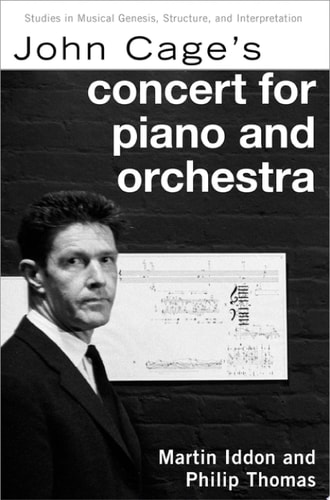
John Cage's Concert For Piano And Orchestra Is One Of The Seminal Works Of The Second Half Of The Twentieth Century, And The Centerpiece Of The Middle Period Of Cage's Output. It Is A Culmination Of Cage's Work Up To That Point, Incorporating Notation Techniques He Had Spent The Past Decade Developing - Techniques Which Remain Radical To This Day. But Despite Cage's Vitality To The Musical Development Of The Twentieth Century, And The Concert's Centrality To His Career, The Work Is Still Rarely Performed And Even More Rarely Examined In Detail. In This Volume, Martin Iddon And Philip Thomas Provide A Rich And Critical Examination Of This Enormously Significant Piece, Tracing Its Many Contexts And Influences - Particularly Schoenberg, Jazz, And Cage's Own Compositional Practice - Through A Wide And Previously Untapped Range Of Archival Sources. Iddon And Thomas Explain The Concert Through A Reading Of Its Many Histories, Especially In Performance - From The Legendary Performer Disobedience And Audience Disorder Of Its 1958 New York Premiere To A No Less Disastrous European Premiere Later The Same Year. They Also Highlight The Importance Of The Piano Soloist Who Premiered The Piece, David Tudor, And Its Use Alongside Choreographer Merce Cunningham's Antic Meet. A Careful Examination Of An Apparently Bewildering Piece, The Book Explores The Critical Response To The Concert's Performances, Re-interrogates The Mythology Surrounding It, And Finally Turns To The Music Itself, In All Its Component Parts, To See What It Truly Asks Of Performers And Listeners.
Menrva's Summary
THE THESIS
This volume investigates the historical significance, compositional complexity, and performance legacy of John Cage's Concert for Piano and Orchestra. Authors Martin Iddon and Philip Thomas, both scholars of experimental music, utilize previously untapped archival sources to contextualize the work within Cage's broader career. They argue that the piece represents a culmination of radical notation techniques and serves as a critical nexus for understanding mid-twentieth-century avant-garde music.
THE SCOPE MAP
What You Will Find
- Analysis of Cage's compositional techniques and notation systems developed over a decade.
- Historical accounts of the 1958 New York and European premieres, including audience and performer reactions.
- Examination of the collaborative relationship between John Cage, pianist David Tudor, and choreographer Merce Cunningham.
- Investigation into the influence of Arnold Schoenberg and jazz on Cage's creative process.
Scope Limits
- The book does not provide a general biography of John Cage, focusing instead on this specific work.
- It does not offer a simplified guide for casual listeners, maintaining a high level of academic rigor.
THE AUTHORITY PERSPECTIVE
Experts and musicologists view this text as a definitive resource for understanding the complexities of Cage's middle-period output. Readers frequently note the academic density of the prose, which provides a thorough, scholarly interrogation of a historically misunderstood musical work.
Page Count:
368
Publication Date:
2020-01-01
Publisher:
Oxford University Press
ISBN-10:
019093848X
ISBN-13:
9780190938482
Biography
Music
Music History
Music theory
20th Century
Community Tags
Similar Books