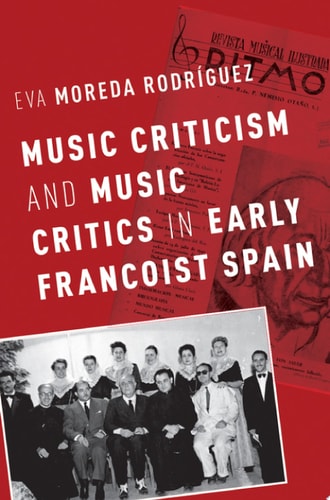
Music Criticism and Music Critics in Early Francoist Spain
0
0
As an Amazon Associate and affiliate partner, Menrva Books earns from qualifying purchases. Learn more
Author Description
The Early Years Of The Franco Regime Saw The Formation Of A Strong Governmental Propaganda Apparatus. Through Expansive Press Laws That Solidified State Control Over Public And Private Media Outlets Alike, The Franco Government Directly Influenced What Information Was Made Available To The Public. While Music Critics And Journalists Were By No Means Free From Government Control And Direction, Music Criticism Under The Franco Regime Did Not Adhere To Any Official Party Line On Music. Indeed, Music Criticism Often Demonstrated A Diversity Of Opinion And Ideological Belief That Runs Counter To Many Common Assumptions About Journalism Under Fascist Regimes. In Music Criticism And Music Critics In Early Francoist Spain, Eva Moreda Rodríguez Presents A Kaleidoscopic Portrait Of The Diverse And Often Divergent Writings Of Music Critics In The Early Years Of The Franco Regime. Although She Does Not Shy Away From The Thorny Issues Of Propaganda And Censorship, Moreda Rodríguez Considers Other Factors That Shaped The Journalistic Discourse Surrounding Music. Political Rivalries, Ideological Diversity Within Musical Conservatism, As Well As The Explicit And Implicit Expectations Of The Franco Government All Influenced The Diverse Landscape Of Music Criticism. Moreover, The Central Issues That Music Critics Were Concerned With During Francoism's Early Years-modernist Music, Spanish Early Music, Traditional Music, And Music's Role In Organizing The State-had Already Been At The Center Of Debates Within The Press For Several Decades. Carefully Selecting Contemporary Writings By Well-known Music Critics, Moreda Rodríguez Contextualizes Music Criticism Written During The Franco Regime Within The Broader Intellectual History Of Spain From The Nineteenth Century Onwards. The First Critical Study Of The Musical Press Of Francoist Spain In The Broader Cultural And Social Fabric Of The Regime, Music Criticism And Music Critics In Early Francoist Spain Is An Essential Resource For Musico
Menrva's Summary
THE THESIS
This book investigates how music criticism functioned as a complex, multifaceted discourse within the restrictive media environment of early Francoist Spain. Eva Moreda Rodríguez, a scholar specializing in Spanish musicology, utilizes archival research and analysis of contemporary press to challenge the assumption that state-controlled media enforced a monolithic ideological stance on music. She argues that political rivalries, aesthetic debates, and long-standing intellectual traditions significantly shaped journalistic output alongside government censorship.
THE SCOPE MAP
What You Will Find
- Analysis of the relationship between state propaganda apparatus and independent journalistic expression.
- Examination of recurring debates regarding modernism, early music, and traditional music.
- Contextualization of Franco-era discourse within the broader nineteenth and twentieth-century Spanish intellectual history.
Scope Limits
- The study focuses specifically on the early years of the Franco regime rather than the entirety of the dictatorship.
- The text prioritizes the professional and ideological landscape of critics over a comprehensive history of musical composition itself.
THE AUTHORITY PERSPECTIVE
Scholars recognize this work as a foundational study that successfully complicates the narrative of total state control over cultural journalism in authoritarian regimes. Readers frequently note the academic rigor and the depth of the historical context provided by the author.
Page Count:
208
Publication Date:
2016-01-01
Publisher:
Oxford University Press
ISBN-10:
0190215879
ISBN-13:
9780190215873
Music History
Spanish History
20th Century
Journalism Studies
Cultural History
Community Tags
Other Editions(3)
Similar Books
Reader Comments
Share Your Thoughts
No comments yet. Be the first to share your thoughts!