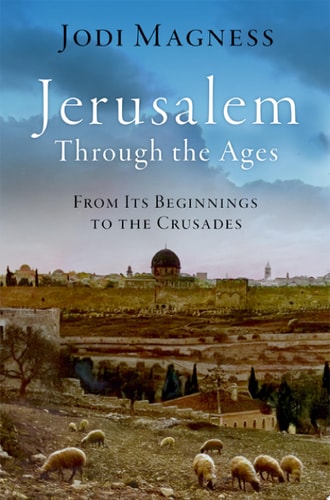
Jerusalem through the Ages: From Its Beginnings to the Crusades
0
0
As an Amazon Associate and affiliate partner, Menrva Books earns from qualifying purchases. Learn more
Author Description
A major new history of one of the world's holiest of cities, based on the most recent archaeological discoveriesFirst settled five thousand years ago by a mountain spring between the Mediterranean and Dead Sea, Jerusalem was named for the god (Shalem) that was worshipped there. When David reportedly conquered the city, ca. 1000 BCE, he transferred the Ark of the Covenant--and with it, the presence of the God of Israel--to this rocky outcrop. Here, David's son Solomon built a permanent house for the God of Israel called the first temple, and since then this spot has been known as the Temple Mount. After Babylonians destroyed Solomon's temple in 586 BCE, it was replaced by the second temple, which is the setting for many of the events described in the Gospel accounts. In 70 CE, the Romans destroyed Jerusalem, leaving the Temple Mount in ruins. Two hundred and fifty years later, the emperor Constantine constructed the Church of the Holy Sepulcher around the spots where Jesus is believed to have been crucified and buried, and the church is now considered Jerusalem's holiest site by many Christians worldwide. In the late seventh century CE the focus shifted back to the Temple Mount, when an early Islamic ruler named `Abd al-Malek enshrined the rocky outcrop in a monument that is still iconic of the city today: the Dome of the Rock. In 1099 Crusaders conquered Jerusalem, and although their rule was brief rule they left a deep impact on the city. Today, much of the old city retains its medieval appearance.For followers of the three Abrahamic faiths, Jerusalem is the place where the presence of the God of Israel dwells--the meeting point of heaven and earth and the locus of divine and human interaction. Jerusalem through the Ages by Jodi Magness explores how these beliefs came to be associated with the city by introducing readers to its complex and layered history, providing a broad yet detailed account, including the most recent archaeological discoveries.
Menrva's Summary
THE THESIS
This book investigates the historical and archaeological evolution of Jerusalem from its earliest settlements to the period of the Crusades. Jodi Magness, a distinguished archaeologist, utilizes recent excavations and material evidence to reconstruct the physical and religious development of the city. She argues that the city's status as a sacred site for three Abrahamic faiths is rooted in a complex, layered history of architectural and cultural transformation.
THE SCOPE MAP
What You Will Find
- Archaeological evidence from the Bronze Age through the medieval period
- Analysis of the construction and destruction of the First and Second Temples
- Examination of the transition from Roman rule to the Byzantine era
- Documentation of the establishment of the Dome of the Rock and Crusader influence
Scope Limits
- The narrative concludes with the Crusader period and does not provide an exhaustive history of the modern era
- The focus remains primarily on archaeological and historical data rather than theological debate
THE AUTHORITY PERSPECTIVE
Experts recognize this work as a significant synthesis of archaeological data that clarifies the physical history of Jerusalem. Readers frequently note the clarity of the prose, which makes complex historical layers accessible to both students and the general public.
Page Count:
648
Publication Date:
2024-01-01
Publisher:
Oxford University Press
ISBN-10:
0190937807
ISBN-13:
9780190937805
Politics
History
Religion
Middle Eastern
Archaeology
Community Tags
Similar Books