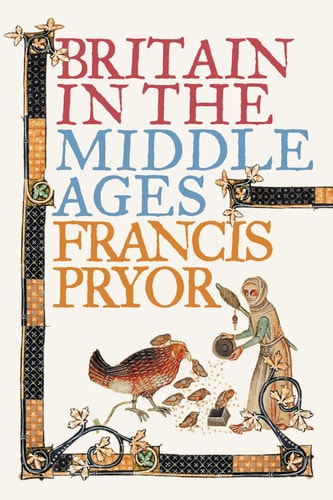
Britain in the Middle Ages: An Archaeological History
0
0
As an Amazon Associate and affiliate partner, Menrva Books earns from qualifying purchases. Learn more
Author Description
This ebook edition does not include illustrations.As he did in ‘Britain B.C.’ and ‘Britain A.D.’, eminent archaeologist Francis Pryor challenges familiar historical views of the Middle Ages by examining fresh evidence from the ground.The term 'Middle Ages' suggests a time between two other ages: a period when nothing much happened. In his radical reassessment, Francis Pryor shows that this is incorrect and that the Middle Ages were actually the time when the modern world was born. This was when Britain moved from Late Antiquity into a world we can recognize: roads and parishes became fixed; familiar institutions, such as the church and local government, came into being; industry became truly industrial; and international trade was now a routine process.Archaeology shows that the Middle Ages were far from static. Based on everyday evidence, Pryor demonstrates that the British agricultural and industrial revolutions had their roots in this era – as did the explosion of British maritime power in the late 1700s. It stresses the strength of development at the expense of 'revolution' and the profound effect the Black Death had on loosening the grip of the feudal system.The Middle Ages can now be seen in a fresh light as an era of great inventiveness as the author examines such topics as 'upward mobility'; the power of the Church; the role of the Guilds as precursors of trade unions; and the importance of transport infrastructure such as roads, bridges and shipbuilders.
Menrva's Summary
THE THESIS
Francis Pryor investigates whether the Middle Ages were a stagnant period of transition or a dynamic era that laid the foundational structures of the modern world. Drawing on his extensive background as a field archaeologist, Pryor utilizes physical evidence from the ground to challenge traditional historical narratives that dismiss the medieval period as a static interlude. He argues that the era was defined by continuous development in infrastructure, industry, and social organization, effectively positioning it as the true origin point of modern British society.
THE SCOPE MAP
What You Will Find
- Archaeological evidence regarding the development of roads, parishes, and local government institutions.
- Analysis of the evolution of industry and international trade networks during the medieval period.
- Examination of the socio-economic impact of the Black Death on the feudal system.
- Exploration of the role of guilds and the Church in shaping early modern labor and social mobility.
THE AUTHORITY PERSPECTIVE
This work offers a revisionist archaeological perspective that prioritizes material evidence over traditional textual interpretations of medieval history. The text provides a dense, analytical framework suitable for readers seeking a grounded, evidence-based reassessment of the medieval era's contribution to modern institutional development.
Page Count:
352
Publication Date:
2013-08-01
Publisher:
HarperCollins UK
ISBN-10:
0007514751
ISBN-13:
9780007514755
History
Great Britain
Europe
Ireland
British History
Medieval
Social Science
Customs & Traditions
Social History
Archaeology
Community Tags
Similar Books