Emma
0
0
As an Amazon Associate and affiliate partner, Menrva Books earns from qualifying purchases. Learn more
Author Description
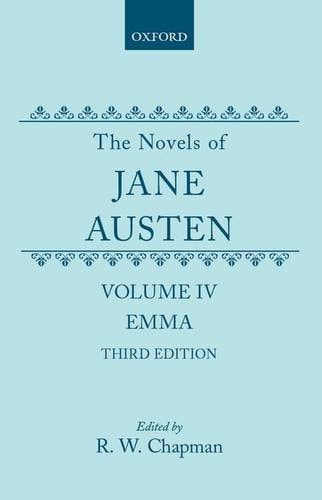
Emma, by Jane Austen, is a novel about youthful hubris and the perils of misconstrued romance. The novel was first published in December 1815. As in her other novels, Austen explores the concerns and difficulties of genteel women living in Georgian-Regency England; she also creates a lively comedy of manners among her characters. Before she began the novel, Austen wrote, "I am going to take a heroine whom no one but myself will much like." In the very first sentence she introduces the title character as "Emma Woodhouse, handsome, clever, and rich." Emma, however, is also rather spoiled, headstrong, and self-satisfied; she greatly overestimates her own matchmaking abilities; she is blind to the dangers of meddling in other people's lives; and her imagination and perceptions often lead her astray.
Menrva's Summary
THE PULSE
Emma Woodhouse, a wealthy and headstrong young woman, inadvertently disrupts the social order of her small community through her misguided attempts at matchmaking. Convinced of her own superior judgment, Emma ignores the warnings of her friend Mr. Knightley and continues to manipulate the romantic lives of those around her. Her interference leads to a series of social blunders and personal humiliations that force her to confront her own vanity. The narrative, presented in a third-person limited perspective, tracks Emma's slow realization of her errors as she navigates the rigid social expectations of Regency England.
INSIDE THE PAGES
- Sharp social satire targeting the manners and pretensions of the landed gentry
- Intricate dialogue that reveals character flaws and hidden motivations
- A focus on the domestic sphere and the limitations placed on women of the era
- The use of irony to highlight the gap between Emma's perception and reality
- A slow-burn romantic development that challenges the protagonist's initial assumptions
- Detailed character studies of a diverse village social circle
- Exploration of class dynamics and the importance of social standing
- A moral arc centered on the maturation of a flawed but intelligent protagonist
THE COLLECTIVE ECHO
Emma remains one of the most studied and debated works in the English literary canon due to its complex protagonist and masterful use of free indirect discourse. Readers and critics frequently highlight the tension between Emma's irritating hubris and her undeniable charm, which makes her growth throughout the novel compelling. The work is widely regarded as a pinnacle of the comedy of manners, praised for its precise observation of human behavior and social nuance. While some early readers found the title character difficult to admire, modern audiences often appreciate the psychological depth Austen brings to her development. The novel continues to serve as a primary reference point for discussions regarding character-driven narratives and the evolution of the novel form.
Page Count:
0
Publication Date:
1815-12-01
Publisher:
MACMILLAN AND CO
ISBN-10:
0007517939
ISBN-13:
9780007517930
Romance
Satire
Emma Woodhouse Fictitious character
Young women
classic
Great Britain
Irish fiction
Historical
Comedy of Manners
England
Community Tags
Similar Books