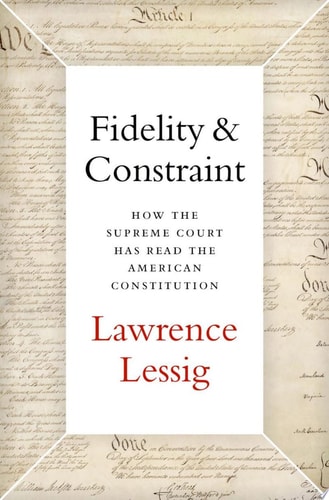
Fidelity & Constraint
0
0
As an Amazon Associate and affiliate partner, Menrva Books earns from qualifying purchases. Learn more
Author Description
The Fundamental Fact About Our Constitution Is That It Is Old -- The Oldest Written Constitution In The World. The Fundamental Challenge For Interpreters Of The Constitution Is How To Read That Old Document Over Time. In Fidelity & Constraint, Legal Scholar Lawrence Lessig Explains That One Of The Most Basic Approaches To Interpreting The Constitution Is The Process Of Translation. Indeed, Some Of The Most Significant Shifts In Constitutional Doctrine Are Products Of The Evolution Of The Translation Process Over Time. In Every New Era, Judges Understand Their Translations As Instances Of Interpretive Fidelity, Framed Within Each New Temporal Context. Yet, As Lessig Also Argues, There Is A Repeatedly Occurring Countermove That Upends The Process Of Translation. Throughout American History, There Has Been A Second Fidelity In Addition To Interpretive Fidelity: What Lessig Calls Fidelity To Role. In Each Of The Cycles Of Translation That He Describes, The Role Of The Judge -- The Ultimate Translator -- Has Evolved Too. Old Ways Of Interpreting The Text Now Become Illegitimate Because They Do Not Match Up With The Judge's Perceived Role. And When That Conflict Occurs, The Practice Of Judges Within Our Tradition Has Been To Follow The Guidance Of A Fidelity To Role. Ultimately, Lessig Not Only Shows Us How Important The Concept Of Translation Is To Constitutional Interpretation, But Also Exposes The Institutional Limits On This Practice. The First Work Of Both Constitutional And Foundational Theory By One Of America's Leading Legal Minds, Fidelity & Constraint Maps Strategies That Both Help Judges Understand The Fundamental Conflict At The Heart Of Interpretation Whenever It Arises And Work Around The Limits It Inevitably Creates.
Menrva's Summary
THE THESIS
How does the inherent age of the United States Constitution necessitate a dynamic process of interpretation that balances textual fidelity with evolving institutional roles? Lawrence Lessig, a prominent legal scholar, examines the historical evolution of constitutional interpretation through the lens of translation. He argues that judges act as translators of an aging document, yet they are frequently constrained by a secondary, competing obligation: fidelity to their perceived institutional role. This tension between interpretive fidelity and role fidelity explains significant shifts in American constitutional doctrine over time.
THE SCOPE MAP
What You Will Find
- A theoretical framework defining constitutional interpretation as a process of translation.
- Historical analysis of how judicial roles have evolved alongside changing societal contexts.
- Strategies for identifying and navigating the conflict between textual meaning and institutional constraints.
Scope Limits
- The text does not provide a comprehensive history of every Supreme Court decision.
- It does not offer a prescriptive manual for specific modern political policy outcomes.
THE AUTHORITY PERSPECTIVE
Legal scholars and practitioners identify this work as a significant contribution to constitutional theory, noting its focus on the structural mechanics of judicial decision-making. Readers frequently observe that the prose maintains a high level of academic rigor while providing a clear, logical framework for understanding the limitations of judicial interpretation.
Page Count:
448
Publication Date:
2019-01-01
Publisher:
Oxford University Press
ISBN-10:
0190932562
ISBN-13:
9780190932565
History
Non-Fiction
Legal Theory
Constitutional Law
Law
Community Tags
Similar Books