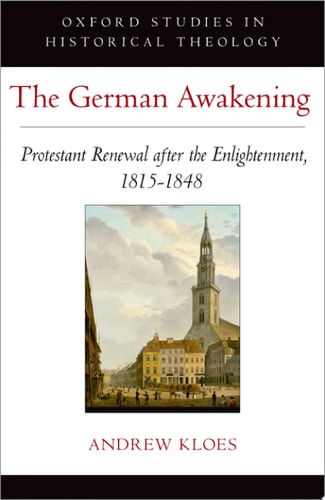
The German Awakening
0
0
As an Amazon Associate and affiliate partner, Menrva Books earns from qualifying purchases. Learn more
Author Description
Historians Of Modern German Culture And Church History Refer To The Awakening Movement (die Erweckungsbewegung) To Describe A Period In The History Of German Protestantism Between The End Of The Napoleonic Wars In 1815 And The Revolution Of 1848. The Awakening Was The Last Major Nationwide Protestant Reform And Revival Movement To Occur In Germany. This Book Analyzes Numerous Primary Sources From The Era Of The Awakening And Synthesizes The Current State Of German Scholarship For An English-speaking Audience. It Examines The Awakening As A Product Of The Larger Social Changes That Were Re-shaping German Society During The Early Decades Of The Nineteenth Century. Theologically, Awakened Protestants Were Traditionalists. They Affirmed Religious Doctrines That Orthodox Protestants Had Professed Since The Confessional Statements Of The Reformation-era. Awakened Protestants Rejected The Changes That Enlightenment Thought Had Introduced Into Protestant Theology And Preaching Since The Mid-eighteenth Century. However, Awakened Protestants Were Also Themselves Distinctly Modern. Their Efforts To Spread Their Religious Beliefs Were Successful Because Of The New Political Freedoms And Economic Opportunities That The Enlightenment Had Introduced. These Social Conditions Gave German Protestants New Means And Abilities To Pursue Their Religious Goals. Awakened Protestants Were Leaders In The German Churches And In The Universities. They Used Their Influence To Found Many Voluntary Organizations For Evangelism, In Germany And Abroad. They Also Established Many Institutions To Ameliorate The Living Conditions Of Those In Poverty. Adapting Protestantism To Modern Society In These Ways Was The Most Original And Innovative Aspect Of The Awakening Movement.
Menrva's Summary
THE THESIS
This book investigates the nature and impact of the German Awakening (die Erweckungsbewegung) as a pivotal movement within nineteenth-century Protestantism. Andrew Kloes, a scholar of modern German culture and church history, utilizes a wide array of primary sources from the era to synthesize current German academic discourse for an English-speaking audience. He argues that while the movement was theologically traditionalist, its success relied on the modern social and political structures fostered by the Enlightenment. The work frames the Awakening as a complex intersection of conservative religious doctrine and innovative organizational adaptation to a changing society.
THE SCOPE MAP
What You Will Find
- Analysis of the German Protestant revival period between 1815 and 1848.
- Examination of the tension between Enlightenment-era social progress and traditionalist theology.
- Documentation of the rise of voluntary organizations, evangelism, and social welfare institutions.
Scope Limits
- The study focuses primarily on the Protestant experience and does not provide an exhaustive history of German Catholicism or secular political movements of the period.
THE AUTHORITY PERSPECTIVE
Scholars and historians recognize this work as a significant contribution to the study of German religious history, particularly for its ability to bridge the gap between German-language scholarship and English-speaking readers. Experts highlight the book's clarity in explaining how traditionalist religious groups successfully navigated the modernization of the nineteenth century.
Page Count:
320
Publication Date:
2019-01-01
Publisher:
Oxford University Press
ISBN-10:
0190936878
ISBN-13:
9780190936877
Religion
History
Protestantism
Church History
European History
Nineteenth century
Community Tags
Similar Books