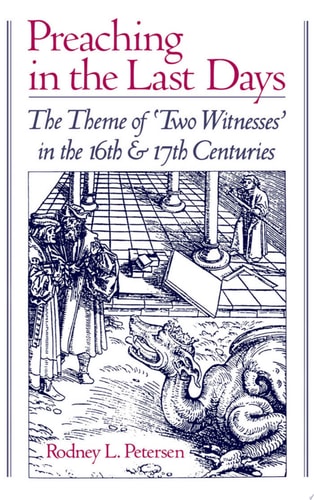
Preaching in the Last Days: The Theme of Two Witnesses in the Sixteenth and Seventeenth Centuries
0
0
As an Amazon Associate and affiliate partner, Menrva Books earns from qualifying purchases. Learn more
Author Description
Visionary strength was given to the piety, polity, and political activity of Protestantism in its formative periods through the way in which the Apocalypse was read. By identifying with the text depicting two witnesses, or prophets, who preach at the end of history, are slain by the beast from the abyss (understood to be Antichrist), and rise again victoriously, representatives of the Protestant movement found a measure of self-identity. This text, Revelation 11:3-13, became the lens through which many envisioned the movement of history from the first advent of Christ to his promised return. It was used by earlier reform movements, but it lent special definition to the work of Protestant ministers through the nineteenth century, suggesting different approaches to social organization. Preaching in the Last Days is a study in the history of how the Apocalypse was read. It is also an examination of how social groups are formed through ideas occasioned by texts. It offers an account of the interplay between religious and social history during the time of the development of Protestantism. Petersen's study provides a fascinating look at the theological significance of how we read biblical texts and the insights this offers on the development of culture, the Christian movement, and its churches. The book is especially important for understanding the assumptions behind the ways in which the book of Revelation is being read and used in our own day.
Menrva's Summary
THE THESIS
This study investigates how the interpretation of the 'two witnesses' passage in Revelation 11:3-13 functioned as a foundational framework for Protestant identity, social organization, and historical understanding during the 16th and 17th centuries. Rodney L. Petersen, an expert in theological history, examines how early modern reformers utilized apocalyptic imagery to define their movement against perceived Antichrist forces. By analyzing the interplay between biblical exegesis and social formation, the author demonstrates how specific readings of the Apocalypse shaped the political and religious trajectory of the Protestant movement.
THE SCOPE MAP
What You Will Find
- Historical analysis of the 16th and 17th-century Protestant reception of Revelation 11:3-13.
- Examination of how apocalyptic texts influence the formation of social and religious groups.
- Discussion of the relationship between theological piety, church polity, and political activity.
- Insights into the long-term impact of these interpretive traditions on Western cultural development.
THE AUTHORITY PERSPECTIVE
Scholars and historians recognize this work as a significant contribution to the study of early modern apocalypticism and its influence on Protestant identity. Readers frequently note the academic density of the prose, which provides a rigorous examination of the intersection between biblical interpretation and historical social change.
Page Count:
336
Publication Date:
1993-01-01
Publisher:
Oxford University Press
ISBN-10:
0195360834
ISBN-13:
9780195360837
History
Religion
Protestantism
Church History
Theology
European History
Community Tags
Similar Books