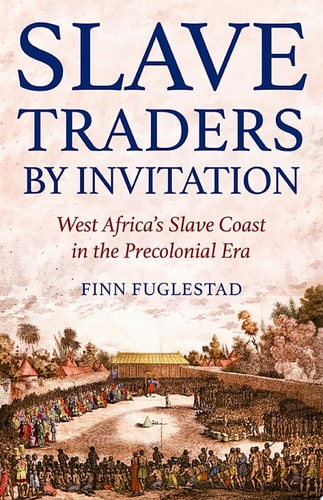
Slave Traders by Invitation: West Africa's Slave Coast in the Precolonial Era
0
0
As an Amazon Associate and affiliate partner, Menrva Books earns from qualifying purchases. Learn more
Author Description
The Slave Coast, situated in what is now the West African state of Benin, was the epicentre of the Atlantic Slave Trade. But it was also an inhospitable, surf-ridden coastline, subject to crashing breakers and devoid of permanent human settlement. Nor was it easily accessible from the interior due to a lagoon which ran parallel to the coast. The local inhabitants were not only sheltered against incursions from the sea, but were also locked off from it. Yet, paradoxically, it was this coastline that witnessed a thriving long-term commercial relation-ship between Europeans and Africans, based on the trans-Atlantic slave trade. How did it come about? How was it all organised? And how did the locals react to the opportunities these new trading relations offered them? The Kingdom of Dahomey is usually cited as the Slave Coast's archetypical slave raiding and slave trading polity. An inland realm, it was a latecomer to the slave trade, and simply incorporated a pre-existing system by dint of military prowess, which ultimately was to prove radically counterproductive. Fuglestad's book seeks to explain the Dahomean 'anomaly' and its impact on the Slave Coast's societies and polities.
Menrva's Summary
THE THESIS
This book investigates the paradox of how the inhospitable Slave Coast of West Africa became the epicenter of the Atlantic slave trade despite its lack of natural harbors and geographic isolation. Finn Fuglestad, a historian specializing in African history, utilizes archival records and regional studies to analyze the commercial relationship between European traders and local African polities. The work argues that the Kingdom of Dahomey, rather than being the sole architect of the trade, was a late-arriving military power that co-opted and intensified existing systems to its own eventual detriment.
THE SCOPE MAP
What You Will Find
- Analysis of the geographic and environmental constraints of the West African coastline.
- Examination of the political evolution of the Kingdom of Dahomey.
- Historical reconstruction of trade logistics between European merchants and local coastal societies.
- Evaluation of the socio-political impact of the slave trade on regional power structures.
Scope Limits
- The study focuses primarily on the Slave Coast region of modern-day Benin.
- The text does not provide a comprehensive history of the entire Atlantic slave trade, focusing instead on the specific 'Dahomean anomaly'.
THE AUTHORITY PERSPECTIVE
Scholars and historians recognize this work as a focused contribution to the study of precolonial West African political economies. Readers frequently note the academic density of the prose and the author's meticulous attention to the interplay between environmental geography and state formation.
Page Count:
433
Publication Date:
2018-01-01
Publisher:
Oxford University Press
ISBN-10:
0190934972
ISBN-13:
9780190934972
History
Modern History
Slave Trade
Colonialism
West Africa
Nigeria history
African history
Political History
Community Tags
Similar Books