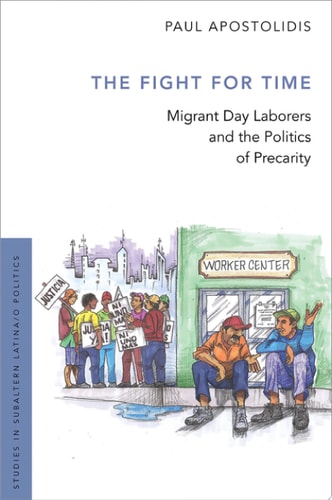
Fight for Time: Migrant Day Laborers and the Politics of Precarity
0
0
As an Amazon Associate and affiliate partner, Menrva Books earns from qualifying purchases. Learn more
Author Description
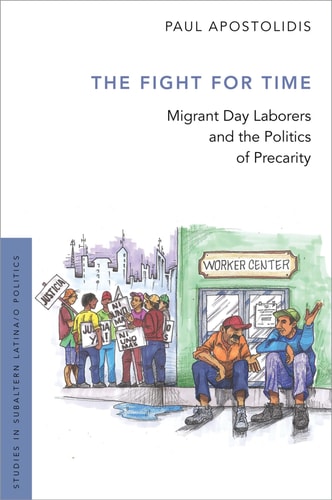
In today's precarious world, working people's experiences are strangely becoming more alike even as their disparities sharpen. The Fight for Time explores the logic behind this paradox by listening to what Latino day laborers say about work and society. The book shows how migrant laborers are both exception and synecdoche in relation to the precarious conditions of contemporary work life. As unauthorized migrants, these workers are subjected to extraordinarily harsh treatment - yet in startling ways, they also epitomize struggles that apply throughout the economy. Juxtaposing day laborers' descriptions of their desperate circumstances and dangerous work with theoretical accounts of the forces fueling insecurity, The Fight for Time illuminates the temporal contradictions that define precarity today. The book taps the core intellectual current among day labor groups - Paulo Freire's popular-education theory - to craft an original "critical-popular" approach for understanding the points of connection between the ways that day laborers view their lives and scholarly analysis of precarious work-life writ large. The result is a temporally attuned and politically bracing perspective on neoliberal crises, the work ethic in the era of affective and digital labor, the intensifying racial governance of public spaces, the burgeoning deportation regime, and the growth of occupational safety and health hazards. The accounts of the day laborers in this book are rich with potential to catalyze social critique among migrant workers - and clarify the terms on which mass-scale opposition to precarity can occur. Such opposition would demand restoration of workers' stolen time, engage in a fight for the city, challenge the conditions under which aversion to financial risk puts workers into physical danger, and foment the refusal of work. We can look to the urban worker centers where this radically democratic politics of precarity is taking root to understand what types of organizations
Menrva's Summary
THE THESIS
How do the experiences of migrant day laborers reveal the underlying temporal contradictions and systemic insecurities of contemporary neoliberal work life? Paul Apostolidis, a political theorist, utilizes ethnographic interviews with Latino day laborers to bridge the gap between individual lived experience and broader economic theory. By applying Paulo Freire’s popular-education framework, the author argues that these workers serve as both an exception and a representative case for the precarious conditions facing the modern global workforce.
THE SCOPE MAP
What You Will Find
- Analysis of neoliberal crises and the evolving nature of the work ethic in digital and affective labor markets.
- Application of Paulo Freire’s critical-popular education theory to labor organizing.
- Examination of racial governance in public spaces and the expansion of deportation regimes.
- Case studies on occupational safety and health hazards within the day labor sector.
Scope Limits
- The text focuses primarily on the experiences of Latino day laborers in the United States and may not account for the entirety of global migrant labor conditions.
- The book does not provide a comprehensive policy manual for labor reform but rather a theoretical framework for social critique.
THE AUTHORITY PERSPECTIVE
Scholars and labor activists frequently cite this work for its innovative synthesis of political theory and on-the-ground ethnographic research. Readers often note the academic density of the prose, which is balanced by the inclusion of direct, poignant accounts from the workers themselves.
Page Count:
328
Publication Date:
2018-01-01
Publisher:
Oxford University Press
ISBN-10:
0190933186
ISBN-13:
9780190933180
Economics
Latino Studies
Labor Studies
Migration Studies
Neoliberalism
Sociology
Community Tags
Similar Books