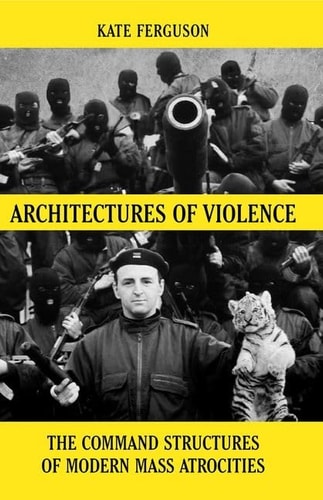
Architectures of Violence: The Command Structures of Modern Mass Atrocities, from Yugoslavia to Syria
0
0
As an Amazon Associate and affiliate partner, Menrva Books earns from qualifying purchases. Learn more
Author Description
Paramilitary or irregular units have been involved in practically every case of identity-based mass violence in the modern world, but detailed analysis of these dynamics is rare. Exploring the case of former Yugoslavia, the genocides in Rwanda and Darfur, and the ongoing violence in Syria, Kate Ferguson exposes the relationships between paramilitaries, state commands, local communities, and organized crime. She presents these 'architectures of violence' as a way of comprehending how the various structures of command and control fit together into domestic and international webs of support enabling and encouraging irregular and paramilitary violence.Visible paramilitary participation in modern mass atrocities has succeeded in masking the continued dominance of the state in a number of violent crises. Irregular combatants have participated so significantly in committing atrocity crimes because political elites benefit from using unconventional forces to fulfil ambitions that violate international law--and international policy responses are hindered when responsibility for violence is ambiguous. Ferguson's inquiry into these overlooked dynamics of mass violence unveils substantial loopholes in current atrocity prevention architecture. Until these are addressed, state authorities will likely continue to use irregular combatants as perpetrators of atrocity.
Menrva's Summary
THE THESIS
This book investigates how state authorities utilize paramilitary and irregular units to facilitate mass atrocities while maintaining plausible deniability. Kate Ferguson, a scholar in atrocity prevention, analyzes the structural relationships between political elites, state commands, and irregular combatants. By examining the mechanics of command and control, she argues that these 'architectures of violence' are intentionally designed to exploit loopholes in international law and hinder global policy responses.
THE SCOPE MAP
What You Will Find
- Comparative analysis of mass violence in former Yugoslavia, Rwanda, Darfur, and Syria.
- Examination of the nexus between state actors, organized crime, and local paramilitary groups.
- A framework for identifying the command structures that enable irregular combatant participation.
Scope Limits
- The text focuses primarily on the strategic utility of paramilitaries for state elites rather than the sociological motivations of individual combatants.
- It does not provide an exhaustive history of every modern conflict, but rather selects specific cases to illustrate the structural argument.
THE AUTHORITY PERSPECTIVE
Experts in international relations and conflict studies identify this work as a significant contribution to the field of atrocity prevention. Readers frequently note the academic rigor of the prose and the clarity with which the author maps complex, clandestine command networks.
Page Count:
240
Publication Date:
2020-10-15
Publisher:
Oxford University Press
ISBN-10:
0190949627
ISBN-13:
9780190949624
Politics
History
Specific Topics
Sociology
Violence
Kindle eBooks
Conflict Studies
World politics
International relations
Categories
Atrocities
Human rights
Kindle Store
Community Tags
Similar Books