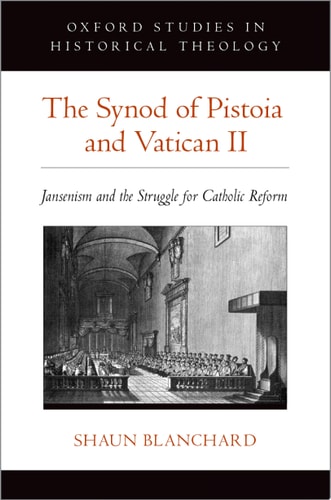
The Synod of Pistoia and Vatican II
0
0
As an Amazon Associate and affiliate partner, Menrva Books earns from qualifying purchases. Learn more
Author Description
In This Book, Shaun Blanchard Argues That The Roots Of The Vatican Ii Reforms Must Be Pushed Back Beyond The Widely Acknowledged Twentieth-century Forerunners Of The Council, Beyond Newman And The Tübingen School In The Nineteenth Century, To The Eighteenth Century, When A Variety Of Reform Movements Attempted Ressourcement And Aggiornamento. This Close Study Of The Synod Of Pistoia (1786) Sheds Surprising New Light On The Nature Of Church Reform And The Roots Of The Second Vatican Council (1962-65). The High-water Mark Of The Late Jansenist Reform Movement, This Tuscan Diocesan Synod Was Harshly Condemned By Pope Pius Vi In The Bull Auctorem Fidei (1794), And In The Increasingly Ultramontane Nineteenth-century Church The Late Jansenist Movement Was Totally Discredited. Nevertheless, Much Of The Pistoian Agenda--an Exaltation Of The Role Of The Local Bishop, An Emphasis On Infallibility As A Gift To The Entire Believing Community, Religious Liberty, A More Comprehensible Liturgy That Incorporates The Vernacular, And The Encouragement Of Lay Bible Reading And Christocentric Devotions--would Be Officially Promulgated At Vatican Ii. Investigating The Theological And Historical Context And Nature Of The Reforms Enacted By The Synod Of Pistoia, He Notes Their Parallels With The Reforms Of Vatican Ii, And Argues That These Connections Are Deeper Than Mere Affinity. The Tumultuous Events Surrounding The Reception Of The Synod Explain Why These Reforms Failed At The Time. This Book Also Offers A Measured Theological Judgment On Whether The Synod Of Pistoia Was True Or False Reform. Although The Pistoians Were Completely Rejected In Their Own Day, The Second Vatican Council Struggled With, And Ultimately Enacted, Remarkably Similar Ideas.
Menrva's Summary
THE THESIS
This book investigates the historical and theological continuity between the eighteenth-century Synod of Pistoia and the reforms enacted during the Second Vatican Council. Shaun Blanchard, a scholar of historical theology, utilizes archival records and ecclesiastical documents to challenge the traditional narrative that Vatican II reforms originated primarily in the nineteenth or twentieth centuries. He argues that the Pistoian agenda represents a foundational, albeit suppressed, precursor to the modernizing efforts of the mid-twentieth century.
THE SCOPE MAP
What You Will Find
- A detailed historical analysis of the 1786 Synod of Pistoia.
- A comparative study of Pistoian theological agendas and Vatican II decrees.
- An examination of the papal bull Auctorem Fidei and its role in suppressing late Jansenist movements.
Scope Limits
- The text does not provide a comprehensive history of the entire Jansenist movement.
- It does not offer a broad survey of all theological developments within the Catholic Church between 1786 and 1962.
THE AUTHORITY PERSPECTIVE
Scholars in the field of ecclesiastical history identify this work as a significant contribution to understanding the long-term development of Catholic reform movements. Readers frequently note the academic density of the prose and the author's meticulous attention to historical context.
Page Count:
0
Publication Date:
2019-01-01
Publisher:
Oxford University Press
ISBN-10:
0190947802
ISBN-13:
9780190947804
Religion
History
Theology
Catholicism
Church History
Vatican II
Community Tags
Similar Books