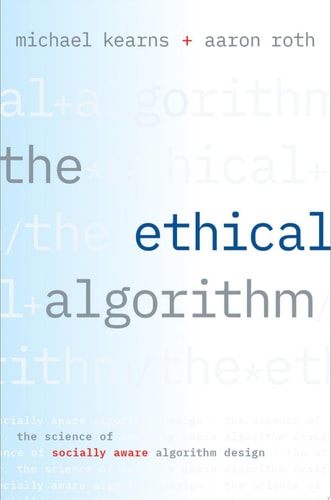
The Ethical Algorithm: The Science of Socially Aware Algorithm Design
0
0
As an Amazon Associate and affiliate partner, Menrva Books earns from qualifying purchases. Learn more
Author Description
Over the course of a generation, algorithms have gone from mathematical abstractions to powerful mediators of daily life. Algorithms have made our lives more efficient, more entertaining, and, sometimes, better informed. At the same time, complex algorithms are increasingly violating the basic rights of individual citizens. Allegedly anonymized datasets routinely leak our most sensitive personal information; statistical models for everything from mortgages to college admissions reflect racial and gender bias. Meanwhile, users manipulate algorithms to "game" search engines, spam filters, online reviewing services, and navigation apps.Understanding and improving the science behind the algorithms that run our lives is rapidly becoming one of the most pressing issues of this century. Traditional fixes, such as laws, regulations and watchdog groups, have proven woefully inadequate. Reporting from the cutting edge of scientific research, The Ethical Algorithm offers a new approach: a set of principled solutions based on the emerging and exciting science of socially aware algorithm design. Michael Kearns and Aaron Roth explain how we can better embed human principles into machine code - without halting the advance of data-driven scientific exploration. Weaving together innovative research with stories of citizens, scientists, and activists on the front lines, The Ethical Algorithm offers a compelling vision for a future, one in which we can better protect humans from the unintended impacts of algorithms while continuing to inspire wondrous advances in technology.
Menrva's Summary
THE THESIS
How can we mathematically encode human values and ethical principles into the algorithms that increasingly mediate modern life? Authors Michael Kearns and Aaron Roth, both prominent computer scientists, argue that traditional regulatory and legal frameworks are insufficient to address the harms caused by automated decision-making. They propose a technical framework for 'socially aware algorithm design,' demonstrating that fairness, privacy, and transparency can be treated as rigorous computational constraints rather than afterthoughts.
THE SCOPE MAP
What You Will Find
- Mathematical frameworks for defining fairness and privacy in machine learning models.
- Analysis of algorithmic bias in high-stakes domains like credit lending and college admissions.
- Strategies for mitigating data leakage and adversarial manipulation of automated systems.
- Case studies illustrating the intersection of computer science and social policy.
Scope Limits
- The text does not provide a comprehensive legal or policy guide for government regulation.
- It does not cover the philosophical history of ethics outside of its application to computer science.
THE AUTHORITY PERSPECTIVE
Experts in the field of computer science recognize this work as a foundational text for understanding the technical challenges of algorithmic accountability. Readers frequently note the balance between accessible prose for non-specialists and the rigorous technical depth required for practitioners in the field.
Page Count:
228
Publication Date:
2019-01-01
Publisher:
Oxford University Press
ISBN-10:
0190948221
ISBN-13:
9780190948221
Trades & Technology
Algorithms
Sociology
Computer Science
Technology & Engineering
Technology
Professional Career & Trade
Data Science
Ethics
Community Tags
Other Editions(2)

Similar Books