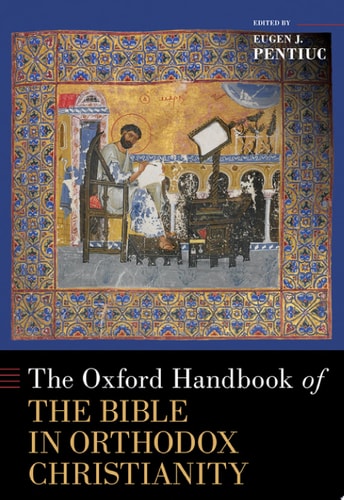
The Oxford Handbook of the Bible in Orthodox Christianity
0
0
As an Amazon Associate and affiliate partner, Menrva Books earns from qualifying purchases. Learn more
Author Description
The Oxford Handbook of the Bible in Orthodox Christianity investigates the various ways in which Orthodox Christian, i.e., Eastern and Oriental, communities, have received, shaped, and interpreted the Christian Bible. The handbook is divided into five parts: Text, Canon, Scripture within Tradition, Toward an Orthodox Hermeneutics, and Looking to the Future.The first part focuses on how the Orthodox Church has never codified the Septuagint or any other textual witnesses as its authoritative text. Textual fluidity and pluriformity, a characteristic of Orthodoxy, is demonstrated by the various ancient and modern Bible translations into Syriac, Coptic, Ethiopian, Armenian among other languages. The second part discusses how, unlike in the Protestant and Roman-Catholic faiths where the canon of the Bible is "closed" and limited to 39 and 46 books, respectively, the Orthodox canon is "open-ended," consisting of 39 canonical books and 10 or more anaginoskomena or "readable" books as additions to Septuagint. The third part shows how, unlike the classical Protestant view of sola scriptura and the Roman Catholic way of placing Scripture and Tradition on par as sources or means of divine revelation, the Orthodox view accords a central role to Scripture within Tradition, with the latter conceived not as a deposit of faith but rather as the Church's life through history. The final two parts survey "traditional" Orthodox hermeneutics consisting mainly of patristic commentaries and liturgical interpretations found in hymnography and iconography, and the ways by which Orthodox biblical scholars balance these traditional hermeneutics with modern historical-critical approaches to the Bible.
Menrva's Summary
THE THESIS
This volume investigates the diverse methodologies and historical frameworks through which Eastern and Oriental Orthodox communities have received, interpreted, and integrated the Christian Bible into their ecclesiastical life. Eugen J. Pentiuc, a scholar of Old Testament and Semitic languages, compiles contributions from various experts to analyze the unique position of Scripture within the Orthodox tradition. The work argues that Orthodox engagement with the Bible is defined by textual fluidity, an open-ended canon, and a hermeneutical approach that embeds Scripture within the ongoing life of the Church rather than treating it as a static, isolated deposit of faith.
THE SCOPE MAP
What You Will Find
- Analysis of textual fluidity and the role of the Septuagint in Orthodox tradition.
- Examination of the open-ended canon, including the status of anaginoskomena books.
- Comparative studies of Orthodox hermeneutics versus Protestant and Roman Catholic models.
- Exploration of patristic, liturgical, and iconographic interpretations of biblical texts.
Scope Limits
- The text does not provide a comprehensive history of every individual Orthodox denomination or local church.
- It does not serve as a devotional guide but rather as an academic examination of theological and historical processes.
THE AUTHORITY PERSPECTIVE
Scholars and students of theology frequently identify this handbook as a foundational resource for understanding the distinctiveness of Orthodox biblical interpretation. Readers often note the academic density of the prose, which serves as a rigorous reference for those seeking to navigate the complexities of Eastern Christian tradition.
Page Count:
703
Publication Date:
2022-01-01
Publisher:
Oxford University Press
ISBN-10:
0190948671
ISBN-13:
9780190948672
Religion
Theology
Bibles
Bible
Christianity
Reference
Community Tags
Similar Books