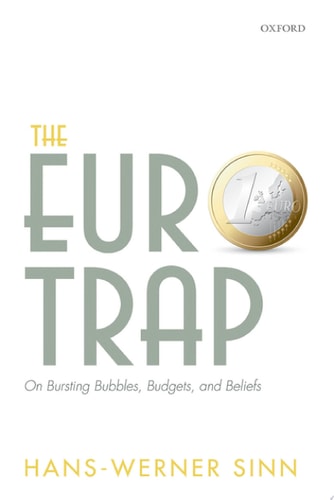
The Euro Trap
0
0
As an Amazon Associate and affiliate partner, Menrva Books earns from qualifying purchases. Learn more
Author Description
This Book Offers A Critical Assessment Of The History Of The Euro, Its Crisis, And The Rescue Measures Taken By The European Central Bank And The Community Of States. The Euro Induced Huge Capital Flows From The Northern To The Southern Countries Of The Eurozone That Triggered An Inflationary Credit Bubble In The Latter, Deprived Them Of Their Competitiveness, And Made Them Vulnerable To The Financial Crisis That Spilled Over From The Us In 2007 And 2008. As Private Capital Shied Away From The Southern Countries, The Ecb Helped Out By Providing Credit From The Local Money-printing Presses. The Ecb Became Heavily Exposed To Investment Risks In The Process, And Subsequently Had To Be Bailed Out By Intergovernmental Rescue Operations That Provided Replacement Credit For The Ecb Credit, Which Itself Had Replaced The Dwindling Private Credit. The Interventions Stretched The Legal Structures Stipulated By The Maastricht Treaty Which, In The Absence Of A European Federal State, Had Granted The Ecb A Very Limited Mandate. These Interventions Created A Path Dependency That Effectively Made Parliaments Vicarious Agents Of The Ecb's Governing Council. This Book Describes What The Author Considers To Be A Dangerous Political Process That Undermines Both The Market Economy And Democracy, Without Solving Southern Europe's Competitiveness Problem. It Argues That The Eurozone Has To Rethink Its Rules Of Conduct By Limiting The Role Of The Ecb, Exiting The Regime Of Soft Budget Constraints And Writing Off Public And Bank Debt To Help The Crisis Countries Breathe Again. At The Same Time, The Eurosystem Should Become More Flexible By Offering Its Members The Option Of Exiting And Re-entering The Euro - Something Between The Dollar And The Bretton Woods System - Until It Eventually Turns Into A Federation With A Strong Political Power Centre And A Uniform Currency Like The Dollar.
Menrva's Summary
THE THESIS
This book investigates the structural flaws of the Eurozone and the subsequent political and economic consequences of the European Central Bank's crisis management. Hans-Werner Sinn, a prominent economist and former president of the Ifo Institute, utilizes historical data and economic theory to argue that the Euro's design induced unsustainable capital flows and credit bubbles. He posits that the resulting rescue operations have compromised the democratic mandate of national parliaments and failed to address the underlying competitiveness issues in Southern Europe.
THE SCOPE MAP
What You Will Find
- Analysis of capital flow dynamics between Northern and Southern Eurozone countries.
- Evaluation of the European Central Bank's credit provision and risk exposure.
- Critique of the legal implications regarding the Maastricht Treaty.
- Proposed policy reforms including debt write-offs and flexible exit mechanisms.
Scope Limits
- The text focuses primarily on the macroeconomic and political institutional framework rather than individual consumer-level financial impacts.
- It does not provide a comprehensive history of the global financial crisis beyond its specific intersection with the Eurozone.
THE AUTHORITY PERSPECTIVE
Economists and policy analysts frequently cite this work as a rigorous, albeit controversial, critique of European monetary integration. Readers often note the technical density of the prose, which requires a foundational understanding of central banking and fiscal policy to fully grasp the author's arguments.
Page Count:
368
Publication Date:
2014-01-01
Publisher:
Oup Oxford
ISBN-10:
0191006661
ISBN-13:
9780191006661
Economics
Macroeconomics
European Union
Finance
Community Tags
Similar Books