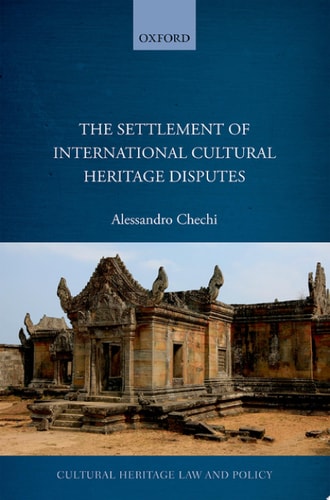
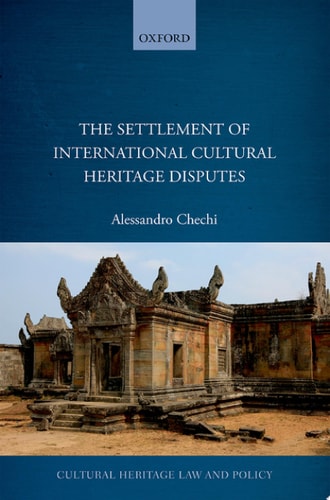
The Settlement of International Cultural Heritage Disputes
0
0
As an Amazon Associate and affiliate partner, Menrva Books earns from qualifying purchases. Learn more
Author Description
The Past Forty Years Have Seen A Wide Proliferation Of Disputes Under International Law Concerning Cultural Heritage. These Have Included The Restitution Of Stolen Art Objects Or The Protection Of Monuments. Unlike Other Fields Of International Law, International Cultural Heritage Law Does Not Have An Ad Hoc Mechanism Of Dispute Settlement. As A Result, Controversies Are To Be Settled Through Negotiation Or, If It Fails, Through Existing Dispute Resolution Means. This Can Result In Similar Cases Being Settled In Different Ways, Thereby Bringing About An Incoherent And Fragmentary Enforcement Of The Law. This Book Offers A Comprehensive And Innovative Analysis Of The Settlement Of Cultural Heritage Disputes. This Examination Is Two-fold. First, It Assesses The Existing Legal Framework And The Available Dispute Settlement Means. Second, It Explores The Feasibility Of Two Solutions For Overcoming The Lack Of A Specialized Forum. The First Is The Establishment Of A New International Court. The Second Concerns Existing Judicial And Extra-judicial Fora And Their Interaction Through The Practice Of 'cross-fertilization'. The Book Focuses On The Substance Of Such Interaction, And Identifies A Number Of Culturally-sensitive Parameters (the 'common Rules Of Adjudication'). It Argues That Existing Judicial And Non-judicial Fora Should Adopt A Cross-fertilizing Perspective To Use And Disseminate Jurisprudence Containing These Common Rules Of Adjudication. It Sets Out How Such An Approach Would Enhance The Effectiveness And Coherence Of Decision-making Processes And Would Be Conducive To The Development Of A Lex Culturalis. This Can Be Defined As A Composite Body Of Rules Designed To Protect Cultural Heritage By Excluding The Mechanical Application Of The Norms Established For Standard Business Transactions Of Ordinary Goods.
Menrva's Summary
THE THESIS
This book investigates the lack of a specialized international forum for cultural heritage disputes and proposes a framework for achieving legal coherence through cross-fertilization. Alessandro Chechi, a scholar in international law, evaluates the current fragmented landscape where disputes over stolen art and monuments are handled by disparate judicial and extra-judicial bodies. He argues that by adopting 'common rules of adjudication,' existing institutions can develop a cohesive 'lex culturalis' that protects cultural heritage more effectively than standard commercial law.
THE SCOPE MAP
What You Will Find
- Analysis of the current international legal framework for cultural heritage protection
- Evaluation of existing dispute settlement mechanisms including negotiation and arbitration
- Proposal for a specialized international court for cultural heritage
- Development of the 'lex culturalis' concept to distinguish cultural objects from ordinary goods
Scope Limits
- Does not provide a comprehensive history of every individual cultural heritage dispute
- Does not offer a definitive guide for private litigation strategies
THE AUTHORITY PERSPECTIVE
Legal scholars and practitioners recognize this work as a significant contribution to the discourse on international cultural heritage law. Experts frequently highlight the author's innovative proposal for cross-fertilization as a practical solution to the current systemic fragmentation in the field.
Page Count:
400
Publication Date:
2014-01-01
Publisher:
Oup Oxford
ISBN-10:
0191009083
ISBN-13:
9780191009082
Legal Studies
Art Law
International Law
Community Tags
Other Editions(3)
Similar Books





Reader Comments
Share Your Thoughts
No comments yet. Be the first to share your thoughts!