Writing and Reading Byzantine Secular Poetry, 1025-1081
0
0
As an Amazon Associate and affiliate partner, Menrva Books earns from qualifying purchases. Learn more
Author Description
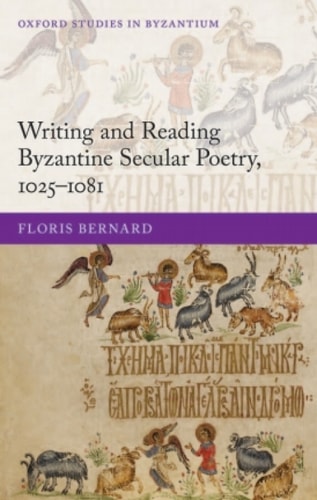
In the mid-eleventh century, secular Byzantine poetry attained a hitherto unseen degree of wit, vividness, and personal involvement, chiefly exemplified in the poetry of Christophoros Mitylenaios, Ioannes Mauropous, and Michael Psellos. This is the first volume to consider this poetic activity as a whole, critically reconsidering modern assumptions about Byzantine poetry, and focusing on Byzantine conceptions of the role of poetry in society. By providing a detailed account of the various media through which poetry was presented to its readers, and by tracing the initial circulation of poems, this volume takes an interest in the Byzantine reader and his/her reading habits and strategies, allowing aspects of performance and visual representation, rarely addressed, to come to the fore. It also examines the social interests that motivated the composition of poetry, establishing a connection with the extraordinary social mobility of the time. Self-representative strategies are analyzed against the background of an unstable elite struggling to find moral justification, which allows the study to raise the question of patronage, examine the discourse used by poets to secure material rewards, and explain the social dynamics of dedicatory epigrams. Finally, gift exchange is explored as a medium that underlines the value of poetry and confirms the exclusive nature of intellectual friendship.
Menrva's Summary
THE THESIS
This study investigates how secular Byzantine poetry between 1025 and 1081 functioned as a social tool for elite mobility, intellectual networking, and moral self-justification. Floris Bernard, a scholar specializing in Byzantine literature and culture, utilizes a combination of literary analysis and social history to examine the works of figures such as Christophoros Mitylenaios, Ioannes Mauropous, and Michael Psellos. The author argues that poetry during this period was not merely an aesthetic exercise but a highly functional medium for navigating the unstable social dynamics of the eleventh-century Byzantine elite.
THE SCOPE MAP
What You Will Find
- Analysis of the social and political functions of eleventh-century Byzantine poetry
- Examination of gift exchange and patronage networks among the intellectual elite
- Investigation into the reading habits, performance contexts, and visual presentation of poems
- Study of self-representative strategies used by poets to secure material rewards
Scope Limits
- The study is strictly limited to the period between 1025 and 1081
- It focuses primarily on secular poetry rather than liturgical or religious verse
THE AUTHORITY PERSPECTIVE
Scholars recognize this work as a significant contribution to the field for its focus on the intersection of literary production and social practice in Byzantium. Readers frequently note the academic density of the prose and the author's meticulous attention to the material conditions of poetic circulation.
Page Count:
384
Publication Date:
2014-01-01
Publisher:
OUP Oxford
ISBN-10:
0191008788
ISBN-13:
9780191008788
History
Poetry
Criticism history
Literary Criticism
Byzantine History
Social History
Community Tags
Other Editions(3)


Similar Books