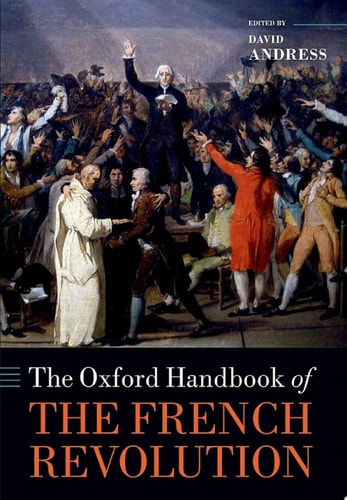
The Oxford Handbook of the French Revolution
0
0
As an Amazon Associate and affiliate partner, Menrva Books earns from qualifying purchases. Learn more
Author Description
The Oxford Handbook of the French Revolution brings together a sweeping range of expert and innovative contributions to offer engaging and thought-provoking insights into the history and historiography of this epochal event. Each chapter presents the foremost summations of academic thinking on key topics, along with stimulating and provocative interpretations and suggestions for future research directions. Placing core dimensions of the history of the French Revolution in their transnational and global contexts, the contributors demonstrate that revolutionary times demand close analysis of sometimes tiny groups of key political actors - whether the king and his ministers or the besieged leaders of the Jacobin republic - and attention to the deeply local politics of both rural and urban populations. Identities of class, gender and ethnicity are interrogated, but so too are conceptions and practices linked to citizenship, community, order, security, and freedom: each in their way just as central to revolutionary experiences, and equally amenable to critical analysis and reflection. This Handbook covers the structural and political contexts that build up to give new views on the classic question of the 'origins of revolution'; the different dimensions of personal and social experience that illuminate the political moment of 1789 itself; the goals and dilemmas of the period of constitutional monarchy; the processes of destabilisation and ongoing conflict that ended that experiment; the key issues surrounding the emergence and experience of 'terror'; and the short- and long-term legacies, for both good and ill, of the revolutionary trauma - for France, and for global politics.
Menrva's Summary
THE THESIS
This volume investigates the multifaceted political, social, and global dimensions of the French Revolution through a comprehensive synthesis of contemporary academic historiography. Edited by David Andress, a specialist in the history of the French Revolution, the book compiles contributions from a diverse group of scholars to re-examine the origins, progression, and long-term legacies of the 1789 upheaval. The text moves beyond traditional narratives by integrating transnational perspectives and analyzing the interplay between elite political actors and local populations.
THE SCOPE MAP
What You Will Find
- Analysis of the structural and political origins of the revolution
- Examination of the constitutional monarchy and the subsequent transition to the Terror
- Investigations into class, gender, ethnicity, and citizenship
- Discussions on the global and long-term political legacies of the revolutionary period
Scope Limits
- Does not provide a singular, unified narrative of the events
- Focuses primarily on academic interpretation rather than a chronological textbook summary
THE AUTHORITY PERSPECTIVE
Scholars and students frequently cite this volume as a primary reference for understanding the current state of research on the French Revolution. Experts highlight the text for its ability to bridge the gap between traditional political history and modern social analysis, making it a standard resource for advanced historical study.
Page Count:
704
Publication Date:
2015-01-01
Publisher:
OUP Oxford
ISBN-10:
019100992X
ISBN-13:
9780191009921
Religion
History
Modern History
French Revolution
Bibles
Political History
Historiography
European History
Community Tags
Other Editions(3)

Similar Books





Reader Comments
Share Your Thoughts
No comments yet. Be the first to share your thoughts!