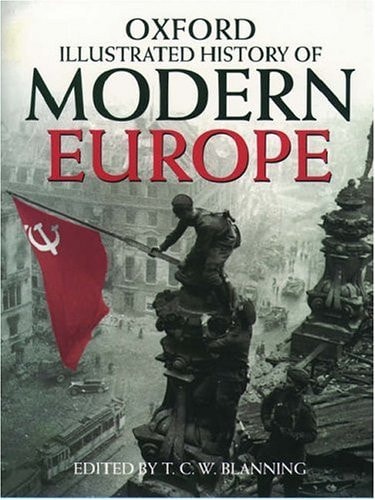
The Oxford Illustrated History of Modern Europe
0
0
As an Amazon Associate and affiliate partner, Menrva Books earns from qualifying purchases. Learn more
Author Description
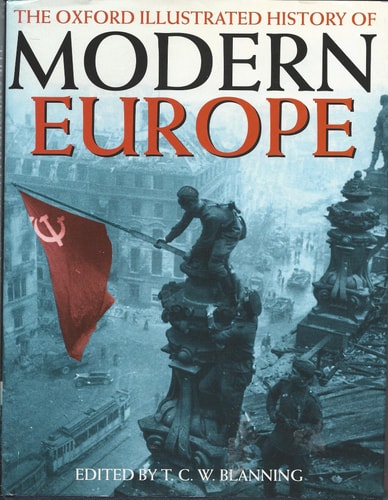
Modern Europeans, argues T. C. W. Blanning, are characterized by the conviction that the ground is moving beneath their feet. Among other things, it has given them a strong sense of dynamism: the world is changing, it can be changed, and so it should be changed. Indeed, in the last two centuries, modern Europeans have transformed not only their continent but the world.This lavishly illustrated history of Europe from the late eighteenth century to the present day offers a fascinating guide to the momentous events, achievements, and personalities that have stamped their mark on the continent. Written by an international team of leading scholars, The Oxford Illustrated History of Modern Europe is at once authoritative, stimulating, and accessible, presenting both change and continuity, revolution and stability--not only in politics but also in the economic, social, cultural, and military realms. Here Europe's turbulent history is traced, from the beginnings of the Revolution in France to the dawn of two world wars to the breakup of the Soviet Union to today's kaleidoscope of nation-states. The achievements (and failures) of key figures from many arenas--politics, technology, warfare, religion, and the arts among them--are drawn vividly, including the contributions of such disparate characters as Louis XVIII of France, Gottlieb Daimler, and André Maginot. Social, cultural, and economic insights are included alongside the record of geopolitical strife: we read of the personality cult as exemplified by the Soviet portraits glorifying Lenin; the importance of the nylon stocking in the post-World War II economic boom; the influence of religion as five new nations (Serbia, Montenegro, Bulgaria, Romania, and Albania) emerged between 1871 and 1914--an influence that continues to be both vigorous and deadly; and the confrontation between traditional and modern cultures captured as the railway age began in Russia.Insightful, provocative, and intellectually rewarding, this book o
Menrva's Summary
THE THESIS
This volume investigates the transformative forces that have defined European society, politics, and culture from the late eighteenth century to the contemporary era. Edited by T. C. W. Blanning, the work synthesizes contributions from an international team of scholars to argue that a persistent sense of dynamism and the capacity for change are the defining characteristics of the modern European experience. The text utilizes a multidisciplinary approach to examine how these convictions have reshaped both the continent and the global landscape over the last two centuries.
THE SCOPE MAP
What You Will Find
- Comprehensive analysis of European history from the French Revolution to the post-Soviet era.
- Examination of political, economic, social, cultural, and military developments.
- Biographical sketches of influential figures ranging from political leaders to technological innovators.
Scope Limits
- The text focuses primarily on the European continent and its internal transformations.
- It does not provide an exhaustive day-by-day chronicle of every minor historical event.
THE AUTHORITY PERSPECTIVE
Experts and academic reviewers frequently highlight this work as a comprehensive and accessible reference for students and general readers interested in modern European history. The prose is noted for its ability to balance high-level geopolitical analysis with specific, illustrative cultural details.
Page Count:
400
Publication Date:
1998-09-17
Publisher:
Oxford University Press
ISBN-10:
0192853481
ISBN-13:
9780192853486
History
Non-Fiction
European History
Europe
Modern History
Cultural History
Political History
Social History
Community Tags
Other Editions(3)

Similar Books





Reader Comments
Share Your Thoughts
No comments yet. Be the first to share your thoughts!