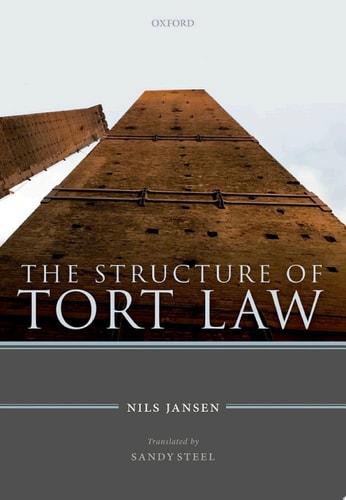
The Structure of Tort Law
0
0
As an Amazon Associate and affiliate partner, Menrva Books earns from qualifying purchases. Learn more
Author Description
This English translation makes available to anglophone readers a modern classic of German tort theory. It argues that modern German tort law is faced with doctrinal tensions based on problematic theoretical assumptions which stem from historical conceptions of tortious liability, inappropriate to modern times. From a theoretical perspective, it argues against the prevalent doctrinal view in Germany that conceives of tortious liability as split between two tracks - a fault-based track and a strict liability track - each with different normative foundations. Instead, Jansen asserts that there is no rigid distinction between the normative foundations of each form of liability. Rather, both fault liability and strict liability in German law, and indeed other European systems, are best considered as resting upon the unifying theoretical structure of outcome responsibility. The book thus places responsibility rather than wrongdoing at the centre of the normative foundations of tort law. Historically, the book traces in detail how conceptions of tort liability have changed from Roman law to contemporary legal doctrine. It shows how particular historical understandings of the normative basis of tort law have led to continuing normative tensions in contemporary doctrine. Finally, the book examines how a reconstruction of modern German - and, indeed, European - law as based upon outcome responsibility should affect its doctrinal structure. This book makes contributions to the study of the theory, history, and doctrinal structure of tort law. While drawing on and explaining German tort law, its comparative, theoretical, and historical analysis will be of interest to scholars in all legal systems.
Menrva's Summary
THE THESIS
This book investigates whether the traditional bifurcation of German tort law into fault-based and strict liability tracks is theoretically sound or if it masks a more unified normative foundation. Nils Jansen, a prominent scholar of legal history and theory, utilizes a rigorous comparative and historical methodology to challenge the prevailing doctrinal consensus. He argues that modern tort law is better understood through the lens of outcome responsibility, tracing the evolution of these concepts from Roman law to contemporary European legal systems to demonstrate how historical assumptions continue to create doctrinal tensions.
THE SCOPE MAP
What You Will Find
- Historical analysis of tort liability from Roman law to modern doctrine
- A comparative framework for evaluating German and European tort systems
- The theoretical construct of outcome responsibility as a unifying principle
- Critical examination of the fault-based versus strict liability dichotomy
Scope Limits
- The text focuses primarily on German legal doctrine, using other European systems only for comparative context
- It does not serve as a practical handbook for litigation or a comprehensive guide to current statutory codes
THE AUTHORITY PERSPECTIVE
Legal scholars and practitioners frequently note the academic density and historical depth of the prose, which demands a high level of familiarity with civil law traditions. Experts highlight this as a significant contribution to the theoretical understanding of liability, particularly for those interested in the intersection of legal history and modern doctrinal structure.
Page Count:
568
Publication Date:
2021-01-01
Publisher:
OUP Oxford
ISBN-10:
0191015105
ISBN-13:
9780191015106
Law germany
Law
Jurisprudence
Professional Career & Trade
Tort Law
Legal History
Legal Theory
European Law