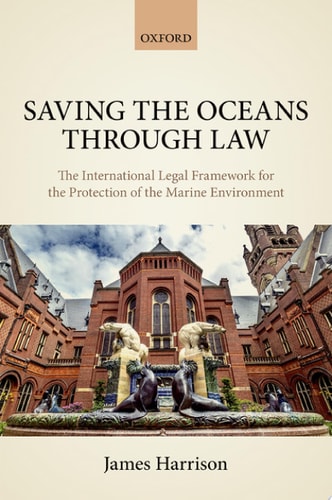
Saving the Oceans Through Law
0
0
As an Amazon Associate and affiliate partner, Menrva Books earns from qualifying purchases. Learn more
Author Description
The Oceans Cover More Than Seventy Per Cent Of The Surface Of The Planet And They Provide Many Vital Ecosystem Services. However, The Health Of The World's Oceans Has Been Deteriorating Over The Past Decades And The Protection Of The Marine Environment Has Emerged As One Of The Most Pressing Legal And Political Challenges For The International Community. An Effective Solution Depends Upon The Cooperation Of All States Towards Achieving Agreed Objectives. This Book Provides A Critical Assessment Of The Role That International Law Plays In This Process, By Explaining And Evaluating The Various Legal Instruments That Have Been Negotiated In This Area, As Well As Key Trends In Global Ocean Governance. Starting With A Detailed Analysis Of The United Nations Convention On The Law Of The Sea, The Book Considers The Main Treaties And Other Legal Texts That Seeks To Prevent, Reduce, And Control Damage To The Marine Environment Caused By Navigation, Seabed Exploitation, Fishing, Dumping, And Land-based Activities, As Well As Emerging Pressures Such As Ocean Noise And Climate Change. The Book Demonstrates How International Institutions Have Expanded Their Mandates To Address A Broader Range Of Marine Environmental Issues, Beyond Basic Problems Of Pollution Control To Include The Conservation Of Marine Biological Diversity And An Ecosystems Approach To Regulation. It Also Discusses The Development Of Diverse Regulatory Tools To Address Anthropogenic Impacts On The Marine Environment And The Extent To Which States Have Adopted A Precautionary Approach In Different Maritime Sectors. Whilst Many Advances Have Been Made In These Matters, This Book Highlights The Need For Greater Coordination Between International Institutions, As Well As The Desirability Of Developing Stronger Enforcement Mechanisms For International Environmental Rules.
Menrva's Summary
THE THESIS
This book investigates the efficacy of international legal frameworks in addressing the systemic deterioration of the global marine environment. James Harrison, a scholar specializing in international law, evaluates how existing treaties and institutional mandates function to mitigate anthropogenic damage to the oceans. He argues that while legal mechanisms have expanded to cover biodiversity and ecosystem-based management, significant gaps remain in enforcement and inter-institutional coordination.
THE SCOPE MAP
What You Will Find
- Analysis of the United Nations Convention on the Law of the Sea (UNCLOS).
- Evaluation of regulatory responses to navigation, fishing, seabed exploitation, and land-based pollution.
- Examination of emerging environmental pressures including ocean noise and climate change.
- Assessment of the shift toward precautionary approaches in maritime governance.
Scope Limits
- The text focuses primarily on international legal instruments rather than domestic or regional maritime law.
- It does not provide a comprehensive scientific manual on marine biology, focusing instead on the legal regulation of human impacts.
THE AUTHORITY PERSPECTIVE
Legal scholars and practitioners identify this work as a rigorous examination of the intersection between international law and environmental policy. Readers frequently note the academic density of the prose, which serves as a comprehensive reference for those studying the evolution of global ocean governance.
Page Count:
300
Publication Date:
2017-01-01
Publisher:
Oxford University Press
ISBN-10:
0191017027
ISBN-13:
9780191017025
Politics
International relations
Marine Biology
Law
Oceanography
Community Tags
Similar Books