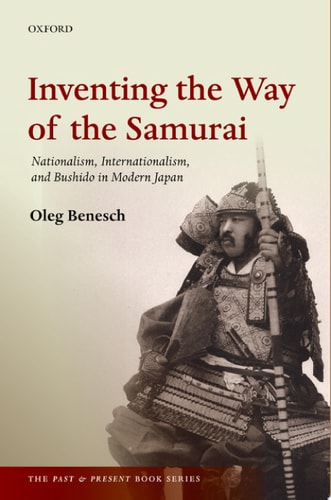
Inventing the Way of the Samurai: Nationalism, Internationalism, and Bushidō in Modern Japan
0
0
As an Amazon Associate and affiliate partner, Menrva Books earns from qualifying purchases. Learn more
Author Description
Inventing the Way of the Samurai examines the development of the 'way of the samurai' - bushidō - which is popularly viewed as a defining element of the Japanese national character and even the 'soul of Japan'. Rather than a continuation of ancient traditions, however, bushidō developed from a search for identity during Japan's modernization in the late nineteenth century. The former samurai class were widely viewed as a relic of a bygone age in the 1880s, and the first significant discussions of bushidō at the end of the decade were strongly influenced by contemporary European ideals of gentlemen and chivalry. At the same time, Japanese thinkers increasingly looked to their own traditions in search of sources of national identity, and this process accelerated as national confidence grew with military victories over China and Russia. Inventing the Way of the Samurai considers the people, events, and writings that drove the rapid growth of bushidō, which came to emphasize martial virtues and absolute loyalty to the emperor. In the early twentieth century, bushidō became a core subject in civilian and military education, and was a key ideological pillar supporting the imperial state until its collapse in 1945. The close identification of bushidō with Japanese militarism meant that it was rejected immediately after the war, but different interpretations of bushidō were soon revived by both Japanese and foreign commentators seeking to explain Japan's past, present, and future. This volume further explores the factors behind the resurgence of bushidō, which has proven resilient through 130 years of dramatic social, political, and cultural change.
Menrva's Summary
THE THESIS
This book investigates the historical construction of bushidō, challenging the perception of it as an ancient, static tradition by framing it as a modern invention born from Japan's late nineteenth-century identity crisis. Oleg Benesch, a historian specializing in modern Japanese history, utilizes a wide array of primary sources, including educational materials, political discourse, and contemporary writings, to argue that bushidō was a dynamic ideological construct. He demonstrates how this concept evolved through the synthesis of Western chivalric ideals and indigenous Japanese values to serve the shifting needs of the imperial state.
THE SCOPE MAP
What You Will Find
- Analysis of the late nineteenth-century modernization period in Japan.
- Examination of the influence of European concepts of chivalry on Japanese thought.
- Investigation into the role of bushidō in state education and military ideology.
- Discussion of the post-1945 resurgence and reinterpretation of samurai values.
Scope Limits
- The text focuses primarily on the ideological and political development of the concept rather than the practical martial training of historical samurai.
- It does not provide a comprehensive military history of Japan, but rather an intellectual history of a specific cultural construct.
THE AUTHORITY PERSPECTIVE
Scholars and historians recognize this work as a significant contribution to the study of Japanese nationalism and the invention of tradition. Readers frequently note the academic rigor and the clarity with which Benesch deconstructs complex ideological shifts over the course of a century.
Page Count:
304
Publication Date:
2014-01-01
Publisher:
OUP Oxford
ISBN-10:
019101673X
ISBN-13:
9780191016738
History
Nationalism
Japanese History
Sociology
Asian History
Military History
Community Tags
Similar Books