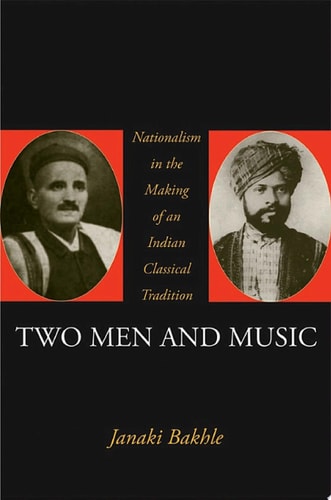
Two Men and Music: Nationalism in the Making of an Indian Classical Tradition
0
0
As an Amazon Associate and affiliate partner, Menrva Books earns from qualifying purchases. Learn more
Author Description
A provocative account of the development of modern national culture in India using classical music as a case study. Janaki Bakhle demonstrates how the emergence of an "Indian" cultural tradition reflected colonial and exclusionary practices, particularly the exclusion of Muslims by the Brahmanic elite, which occurred despite the fact that Muslims were the major practitioners of the Indian music that was installed as a "Hindu" national tradition. This book lays bare how a nation's imaginings--from politics to culture--reflect rather than transform societal divisions.
Menrva's Summary
THE THESIS
This book investigates how the construction of a modern Indian national identity utilized classical music as a vehicle to reinforce specific cultural and religious exclusions. Janaki Bakhle, a scholar of South Asian history, examines the historical transition of Indian classical music from a diverse, practitioner-led tradition to a codified, Brahmanic-centered national symbol. By analyzing the intersection of colonial policy and nationalist rhetoric, she argues that the formation of this cultural identity was deeply exclusionary toward Muslim practitioners who had historically sustained the art form.
THE SCOPE MAP
What You Will Find
- Historical analysis of the transition from courtly music traditions to nationalized art forms.
- Examination of the role of the Brahmanic elite in shaping cultural policy during the colonial period.
- Critical review of how nationalist movements utilized cultural heritage to define the boundaries of the nation.
Scope Limits
- The text does not provide a comprehensive technical history of musical theory or performance practice.
- It does not focus on contemporary developments in Indian classical music post-independence.
THE AUTHORITY PERSPECTIVE
Scholars and historians frequently cite this work as a critical intervention in the study of Indian cultural nationalism and the politics of identity. Readers often note the academic density of the prose, which provides a rigorous examination of the socio-political mechanisms behind the canonization of Indian classical music.
Page Count:
349
Publication Date:
2005-01-01
Publisher:
Oxford University Press
ISBN-10:
0190290242
ISBN-13:
9780190290245
History
Musicology
Sociology
India
Asian History
Music
Humanities
Nationalism
Music History
Community Tags
Similar Books