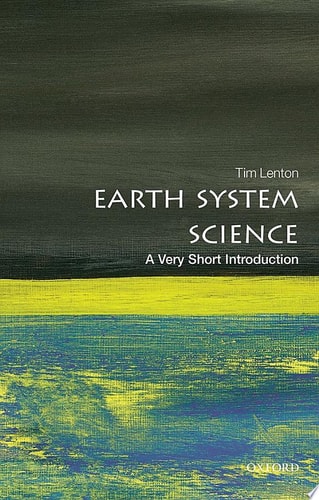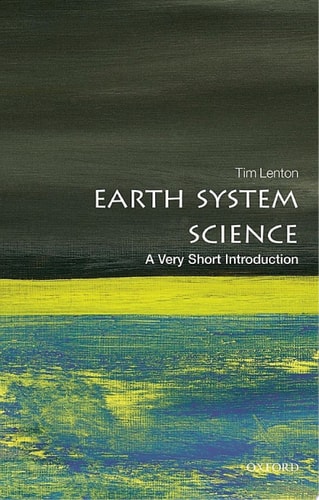
Earth System Science: A Very Short Introduction
0
0
As an Amazon Associate and affiliate partner, Menrva Books earns from qualifying purchases. Learn more
Author Description
When humanity first glimpsed planet Earth from space, the unity of the system that supports humankind entered the popular consciousness. The concept of the Earth's atmosphere, biosphere, oceans, soil, and rocks operating as a closely interacting system has rapidly gained ground in science. This new field, involving geographers, geologists, biologists, oceanographers, and atmospheric physicists, is known as Earth System Science. In this Very Short Introduction, Tim Lenton considers how a world in which humans could evolve was created; how, as a species, we are now reshaping that world; and what a sustainable future for humanity within the Earth System might look like. Drawing on elements of geology, biology, chemistry, physics, and mathematics, Lenton asks whether Earth System Science can help guide us onto a sustainable course before we alter the Earth system to the point where we destroy ourselves and our current civilisation. ABOUT THE SERIES: The Very Short Introductions series from Oxford University Press contains hundreds of titles in almost every subject area. These pocket-sized books are the perfect way to get ahead in a new subject quickly. Our expert authors combine facts, analysis, perspective, new ideas, and enthusiasm to make interesting and challenging topics highly readable.
Menrva's Summary
THE THESIS
This book investigates the core question of how Earth functions as a singular, integrated system and whether this scientific understanding can facilitate a sustainable future for human civilization. Tim Lenton, a professor of climate change and Earth system science, synthesizes data from geology, biology, chemistry, and physics to explain the complex feedback loops that maintain planetary habitability. He argues that human activity has become a significant geological force, necessitating a shift in how we manage our relationship with the biosphere, atmosphere, and oceans.
THE SCOPE MAP
What You Will Find
- An overview of the interconnected components of the Earth system including the atmosphere, biosphere, and lithosphere.
- Analysis of the historical evolution of Earth's climate and life-sustaining conditions.
- Discussion of human impact on planetary feedback loops and the concept of the Anthropocene.
- Exploration of sustainability models and the potential for planetary management.
Scope Limits
- The text does not provide exhaustive technical data or primary research papers.
- It does not offer a comprehensive policy manual for specific environmental legislation.
THE AUTHORITY PERSPECTIVE
Experts and readers frequently cite this work as an accessible entry point for understanding the complexities of Earth system science without requiring a background in advanced mathematics. The text is noted for its ability to distill dense scientific concepts into a concise, readable format suitable for students and interested laypeople.
Page Count:
168
Publication Date:
2016-01-01
Publisher:
OUP Oxford
ISBN-10:
0191028967
ISBN-13:
9780191028960
Science
Non-Fiction
Earth Sciences
Earth Science
Geology
Ecology