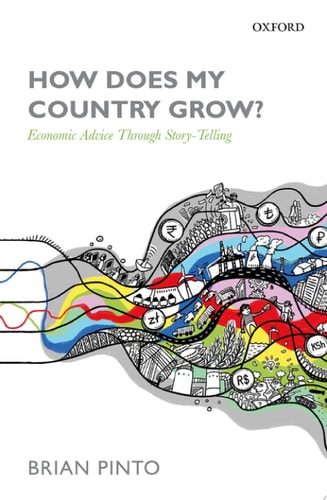
How Does My Country Grow?
0
0
As an Amazon Associate and affiliate partner, Menrva Books earns from qualifying purchases. Learn more
Author Description
Written By A Former World Bank Economist, How Does My Country Grow? Distils Growth Policy Lessons From The Author's First-hand Experience In Poland, Kenya, India, And Russia, And His Contributions To The Economic Policy Debates That Followed The Emerging Market Crises Of 1997 To 2001, Extending Up To The Global Financial Crisis Of 2008-09. Based On Living And Working In The Field, The Author Argues That Country Economic Analysis Is In Effect A Separate, Integrative Branch Of Economics That Draws Upon But Is Distinct From Academic Economics. The Country Stories Recounted, Reinforced By The Emerging Market Experience Since The 1980s, Point To A Canonical Growth Policy Package Built Around Three Interconnected Elements: The Intertemporal Budget Constraint Of The Government; The Micropolicy Trio Of Hard Budgets, Competition And Competitive Real Exchange Rates; And Managing Volatility From External, But Especially Domestic, Sources. This Package Is Underpinned By Good Governance, Which Finds Its Most Immediate Expression In The Management Of The Public Finances. While The Discussion Is Tilted Towards Developing Countries, The Insights Have Considerable Relevance For Advanced Economies, Many Of Which Today Are In The Throes Of Their Own Growth-cum-sovereign Debt Crises.
Menrva's Summary
THE THESIS
How does a nation achieve sustainable economic growth in the face of volatile global markets and internal fiscal constraints? Brian Pinto, a former World Bank economist, utilizes his extensive field experience in nations such as Poland, Kenya, India, and Russia to argue that country economic analysis functions as a distinct, integrative discipline separate from traditional academic theory. He proposes a canonical growth policy framework centered on the government's intertemporal budget constraint, a specific micropolicy trio, and the management of domestic and external volatility.
THE SCOPE MAP
What You Will Find
- A framework for country economic analysis based on the intertemporal budget constraint.
- The micropolicy trio: hard budgets, competition, and competitive real exchange rates.
- Analysis of emerging market crises from 1997 to 2009.
- Strategies for managing domestic and external economic volatility.
Scope Limits
- The text focuses primarily on developing economies, though it draws parallels to advanced nations.
- It does not provide a universal economic theory but rather a practitioner-based policy guide.
THE AUTHORITY PERSPECTIVE
Experts and practitioners value this work for its bridge between high-level economic theory and the realities of on-the-ground policy implementation. Readers frequently note the practical density of the prose, which serves as a useful reference for those interested in the intersection of governance and public finance.
Page Count:
224
Publication Date:
2014-01-01
Publisher:
Oup Oxford
ISBN-10:
0191024090
ISBN-13:
9780191024092
Economics
Finance
Macroeconomics
Public Policy
Community Tags
Similar Books