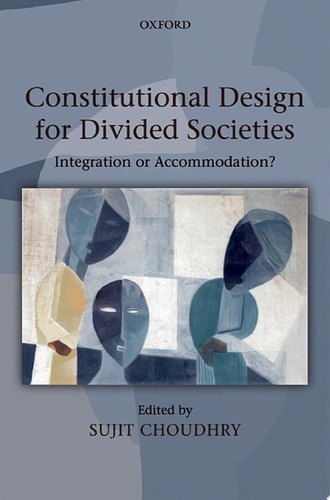
Constitutional Design for Divided Societies: Integration or Accommodation?
0
0
As an Amazon Associate and affiliate partner, Menrva Books earns from qualifying purchases. Learn more
Author Description
How should constitutional design respond to the opportunities and challenges raised by ethnic, linguistic, religious, and cultural differences, and do so in ways that promote democracy, social justice, peace and stability? This is one of the most difficult questions facing societies in the world today. There are two schools of thought on how to answer this question. Under the heading of accommodation, some have argued for the need to recognize, institutionalize and empower differences. There are a range of constitutional instruments available to achieve this goal, such as multinational federalism and administrative decentralization, legal pluralism (e.g. religious personal law), other forms of non-territorial minority rights (e.g. minority language and religious education rights), consociationalism, affirmative action, legislative quotas, etc. But others have countered that such practices may entrench, perpetuate and exacerbate the very divisions they are designed to manage. They propose a range of alternative strategies that fall under the rubric of integration that will blur, transcend and cross-cut differences. Such strategies include bills of rights enshrining universal human rights enforced by judicial review, policies of disestablishment (religious and ethnocultural), federalism and electoral systems designed specifically to include members of different groups within the same political unit and to disperse members of the same group across different units, are some examples. In this volume, leading scholars of constitutional law, comparative politics and political theory address the debate at a conceptual level, as well as through numerous country case-studies, through an interdisciplinary lens, but with a legal and institutional focus.
Menrva's Summary
THE THESIS
This volume investigates whether constitutional design should prioritize the accommodation of ethnic, linguistic, and religious differences or the integration of diverse groups into a unified democratic framework. Editor Sujit Choudhry, a prominent scholar in constitutional law, compiles interdisciplinary research from experts in political theory and comparative politics to evaluate how institutional structures influence social stability, democracy, and justice. The text contrasts the strategy of institutionalizing group differences against the strategy of transcending them through universal rights and cross-cutting political mechanisms.
THE SCOPE MAP
What You Will Find
- Comparative analysis of multinational federalism and administrative decentralization.
- Evaluation of legal pluralism, religious personal law, and minority rights frameworks.
- Examination of electoral systems and legislative quotas as tools for group inclusion.
- Case studies of various nations facing deep-seated social divisions.
Scope Limits
- The text focuses primarily on legal and institutional mechanisms rather than sociological or grassroots peace-building efforts.
- It does not provide a singular prescriptive model for all divided societies, acknowledging the context-specific nature of constitutional success.
THE AUTHORITY PERSPECTIVE
Scholars and practitioners in the field of comparative constitutionalism identify this work as a primary reference for understanding the tension between identity-based recognition and universalist integration. Readers frequently note the academic density of the prose, which is tailored for legal professionals, political scientists, and policy makers.
Page Count:
485
Publication Date:
2008-01-01
Publisher:
OUP Oxford
ISBN-10:
0191021512
ISBN-13:
9780191021510
Sociology
Comparative Politics
Professional Career & Trade
Political Theory
Constitutional Law
Government
Community Tags
Other Editions(3)


Similar Books












Reader Comments
Share Your Thoughts
No comments yet. Be the first to share your thoughts!