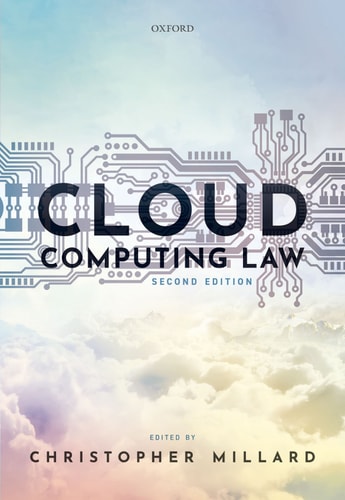
Cloud Computing Law
0
0
As an Amazon Associate and affiliate partner, Menrva Books earns from qualifying purchases. Learn more
Author Description
Cloud computing continues to expand dramatically and the 'as a Service' model is now both mainstream and ubiquitous. Cloud now encompasses everything from the remote provision of essential computer processing and storage resources, through to delivery of complex business and government services, logistics, healthcare, education, and entertainment. The Covid-19 pandemic provided a striking demonstration of cloud computing's global scalability and resilience, as billions of workers and students switched in a matter of weeks to working and studying 'from home'. This book delivers an accessible analysis of the key legal and regulatory issues that surround cloud computing. Topics covered include contracts for cloud services, information ownership and licensing, privacy and data protection, standards and competition law, law enforcement access to data, and international tax models for cloud and other digital services. The book is organised in four parts. Part I explains what cloud computing is, why it matters, and what non-technical readers need to know about how it works. Part II includes a detailed review of standard contracts for 40 cloud services and highlights key legal and commercial issues that arise in negotiated transactions for cloud services. Ownership of, and access to, 'digital assets' are also explored. Part III focusses on the application of data protection and cybersecurity rules, including an in-depth assessment of the impact of the EU's General Data Protection Regulation (GDPR) on providers and users of cloud services. Finally, Part IV addresses governance issues relating to public sector use of cloud, access to cloud data by law enforcement authorities, competition rules and standards, and the disruption to global taxation models caused by the rapid shift to cloud services.
Menrva's Summary
THE THESIS
This book investigates the complex legal and regulatory framework governing the global adoption and operation of cloud computing services. Christine Swanton provides a comprehensive analysis of the legal challenges inherent in the 'as a Service' model, drawing on her expertise to bridge the gap between technical infrastructure and legislative requirements. The text evaluates how existing legal structures, including contract law and international tax models, adapt to the rapid expansion of digital service delivery.
THE SCOPE MAP
What You Will Find
- Analysis of standard cloud service contracts and commercial negotiation points
- In-depth assessment of GDPR and cybersecurity compliance requirements
- Examination of law enforcement access to data and public sector governance
- Discussion on international taxation models for digital services
Scope Limits
- Does not provide specific legal advice for individual corporate entities
- Does not cover technical implementation or software engineering practices
THE AUTHORITY PERSPECTIVE
Experts identify this work as a structured resource for legal professionals and business stakeholders navigating the intersection of technology and regulation. Readers frequently note the clarity with which the author translates technical cloud concepts into actionable legal analysis.
Page Count:
648
Publication Date:
2021-01-01
Publisher:
OUP Oxford
ISBN-10:
0191026085
ISBN-13:
9780191026089
Cybersecurity
Law
Data privacy
Professional Career & Trade
Technology
Business Law
Community Tags
Similar Books