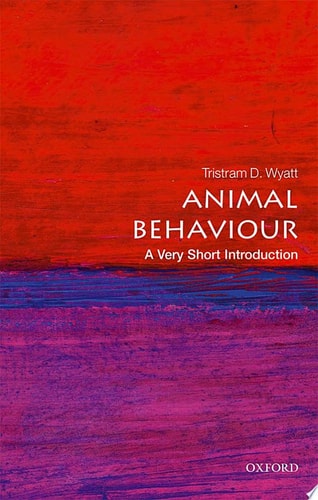
Animal Behaviour: A Very Short Introduction
0
0
As an Amazon Associate and affiliate partner, Menrva Books earns from qualifying purchases. Learn more
Author Description
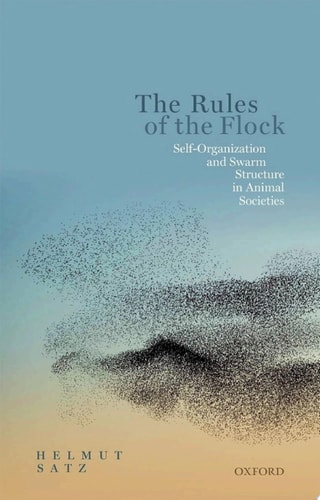
How animals behave is crucial to their survival and reproduction. The application of new molecular tools such as DNA fingerprinting and genomics is causing a revolution in the study of animal behaviour, while developments in computing and image analysis allow us to investigate behaviour in ways never previously possible. By combining these with the traditional methods of observation and experiments, we are now learning more about animal behaviour than ever before. In this Very Short Introduction Tristram D. Wyatt discusses how animal behaviour has evolved, how behaviours develop in each individual (considering the interplay of genes, epigenetics, and experience), how we can understand animal societies, and how we can explain collective behaviour such as swirling flocks of starlings. Using lab and field studies from across the whole animal kingdom, he looks at mammals, butterflies, honeybees, fish, and birds, analysing what drives behaviour, and exploring instinct, learning, and culture. Looking more widely at behavioural ecology, he also considers some aspects of human behaviour. ABOUT THE SERIES: The Very Short Introductions series from Oxford University Press contains hundreds of titles in almost every subject area. These pocket-sized books are the perfect way to get ahead in a new subject quickly. Our expert authors combine facts, analysis, perspective, new ideas, and enthusiasm to make interesting and challenging topics highly readable.
Menrva's Summary
THE THESIS
This book investigates the biological, genetic, and environmental mechanisms that drive animal behavior across the natural world. Tristram D. Wyatt, a researcher in the field of pheromones and animal behavior, synthesizes traditional observational methods with modern molecular tools like genomics and DNA fingerprinting. He presents a framework that examines how behavior evolves, develops through the interplay of genes and experience, and manifests in complex social structures.
THE SCOPE MAP
What You Will Find
- Analysis of behavioral evolution and development
- Examination of collective behaviors in species such as starlings and honeybees
- Integration of molecular biology and computing in behavioral research
- Comparative study of instinct, learning, and culture across the animal kingdom
Scope Limits
- Does not provide an exhaustive encyclopedia of every animal species
- Focuses on scientific principles rather than anecdotal nature writing
THE AUTHORITY PERSPECTIVE
Experts and readers recognize this text as a concise, high-level overview suitable for students and interested laypeople. The prose is noted for its ability to condense complex ethological research into an accessible format without sacrificing scientific rigor.
Page Count:
168
Publication Date:
2017-01-01
Publisher:
OUP Oxford
ISBN-10:
0191020958
ISBN-13:
9780191020957
Science
Nature
Ethology
Biology
Zoology