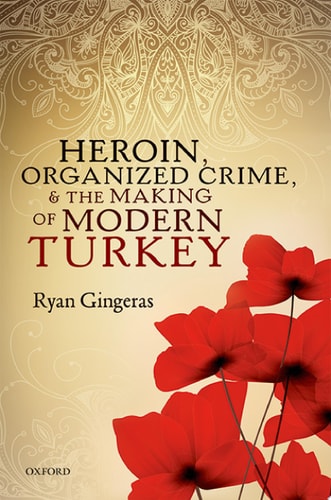
Heroin, Organized Crime, and the Making of Modern Turkey
0
0
As an Amazon Associate and affiliate partner, Menrva Books earns from qualifying purchases. Learn more
Author Description
Heroin, Organized Crime, and the Making of Modern Turkey explores the history of organized crime in Turkey and the roles which gangs and gangsters have played in the making of the Turkish state and Turkish politics. Turkey's underworld, which has been at the heart of several devastating scandals over the last several decades, is strongly tied to the country's long history of opium production and heroin trafficking. As an industry at the centre of the Ottoman Empire's long transition into the modern Turkish Republic, as important as the silk road had been in earlier centuries, the modern rise of the opium and heroin trade helped to solidify and complicate long-standing relationships between state officials and criminal syndicates. Such relationships produced not only ongoing patterns of corruption, but helped fuel and enable repeated acts of state violence. Drawing upon new archival sources from the United States and Turkey, including declassified documents from the Prime Minister's Archives of the Republic of Turkey and the Central Intelligence Agency, Heroin, Organized Crime, and the Making of Modern Turkey provides a critical window into how a handful of criminal syndicates played supporting roles in the making of national security politics in the contemporary Turkey. The rise of the 'Turkish mafia', from its origins in the late Ottoman period to its role in the 'deep state' revealed by the so-called Susurluk and Ergenekon scandals, is a story that mirrors troubling elements in the republic's establishment and emphasizes the transnational and comparative significance of narcotics and gangs in the country's past.
Menrva's Summary
THE THESIS
This book investigates the historical intersection between the illicit narcotics trade and the development of the modern Turkish state. Ryan Gingeras, a scholar specializing in the history of the Ottoman Empire and modern Turkey, utilizes a wealth of primary source material to argue that criminal syndicates were not merely peripheral actors but integral participants in the formation of Turkish political structures and national security policy. By examining the transition from the late Ottoman period to the contemporary Republic, the author demonstrates how the opium and heroin trade facilitated enduring, often corrupt, alliances between state officials and underworld figures.
THE SCOPE MAP
What You Will Find
- Historical analysis of the opium and heroin trade from the late Ottoman era to the present day.
- Examination of the 'deep state' phenomenon and its relation to criminal syndicates.
- Documentation of the Susurluk and Ergenekon political scandals.
Scope Limits
- The text does not provide a comprehensive biography of individual mob figures, focusing instead on institutional and state-level impacts.
- The analysis is restricted to the Turkish context and does not offer a global comparative study of narcotics trafficking.
THE AUTHORITY PERSPECTIVE
Scholars and historians recognize this work as a significant contribution to understanding the structural role of corruption and organized crime in Turkish governance. Readers frequently note the academic density of the prose and the rigorous use of declassified archival documents from both Turkish and American sources.
Page Count:
304
Publication Date:
2014-01-01
Publisher:
OUP Oxford
ISBN-10:
0191025100
ISBN-13:
9780191025105
True Crime
History
Kindle Store
Categories
European History
Crime europe
Middle Eastern
Criminology
Turkey
Europe
Kindle eBooks
Turkey history
Educational Resources
Politics & Government
Community Tags
Similar Books